Field Notes
Small discoveries from walks with Vera—passing moments, unexpected encounters and the beginnings of ideas that sometimes become artworks.
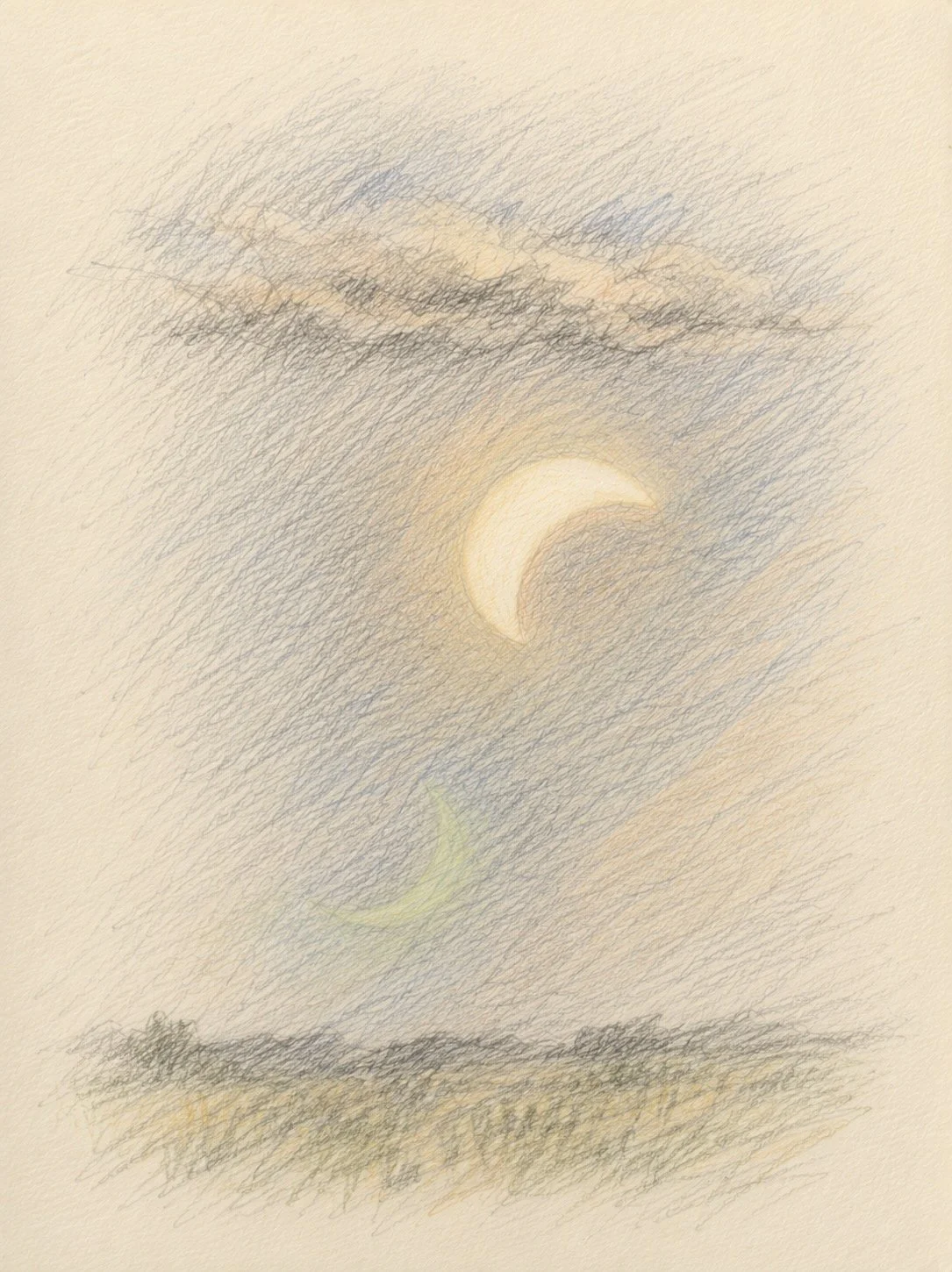
An eclipse is one of those rare moments when the ordinary rules of daylight seem briefly suspended. For centuries it was read as an omen; now we understand the mechanics, but the experience still feels wonderfully strange.
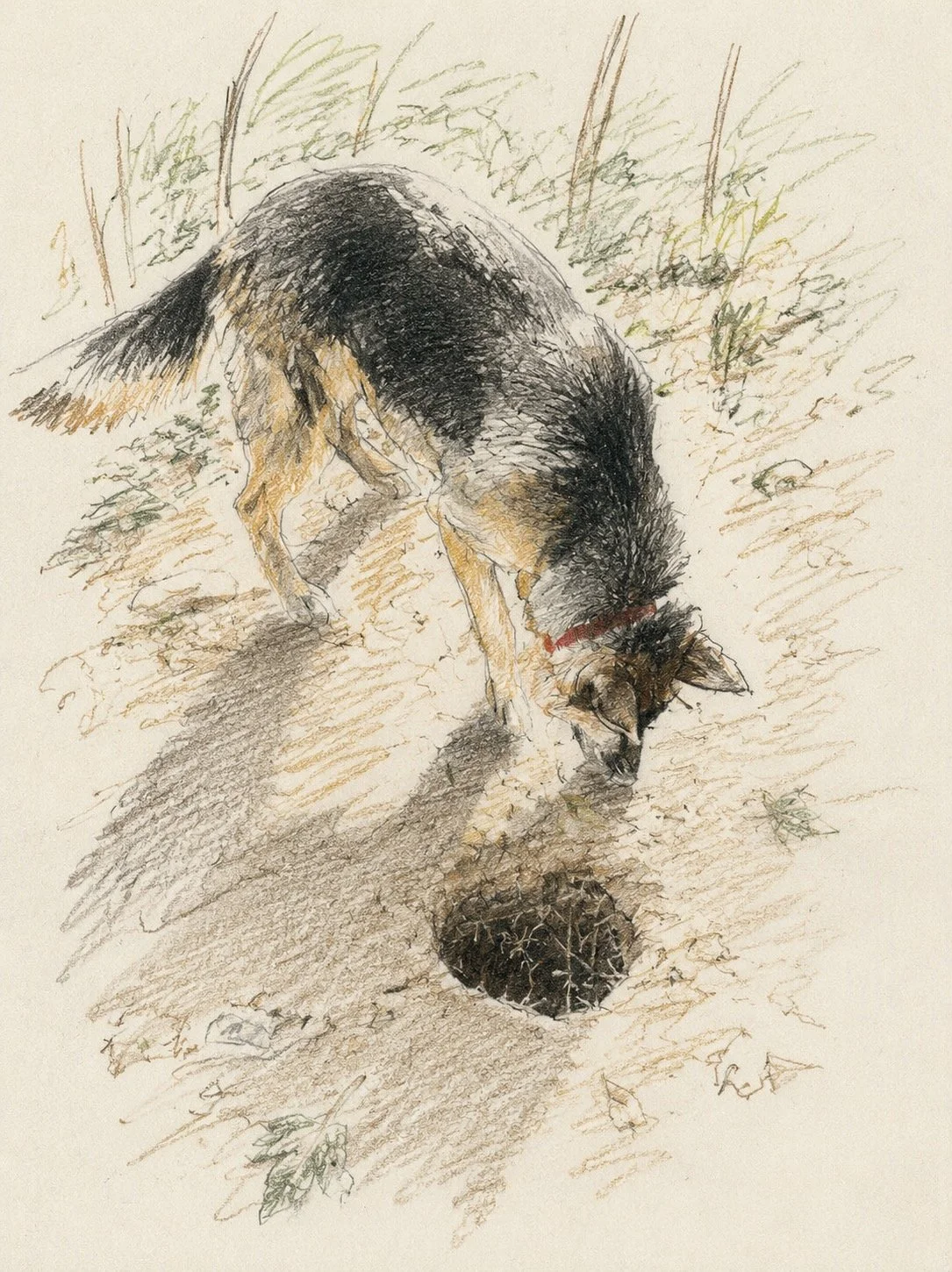
Who Lives in a Hole Like This? Vera stopped suddenly, her nose hovering over a neat, dark opening in the path. Whoever lived below was sensibly keeping quiet, although Vera was prepared to wait. Sometimes the most interesting discoveries are the ones that leave us wondering.
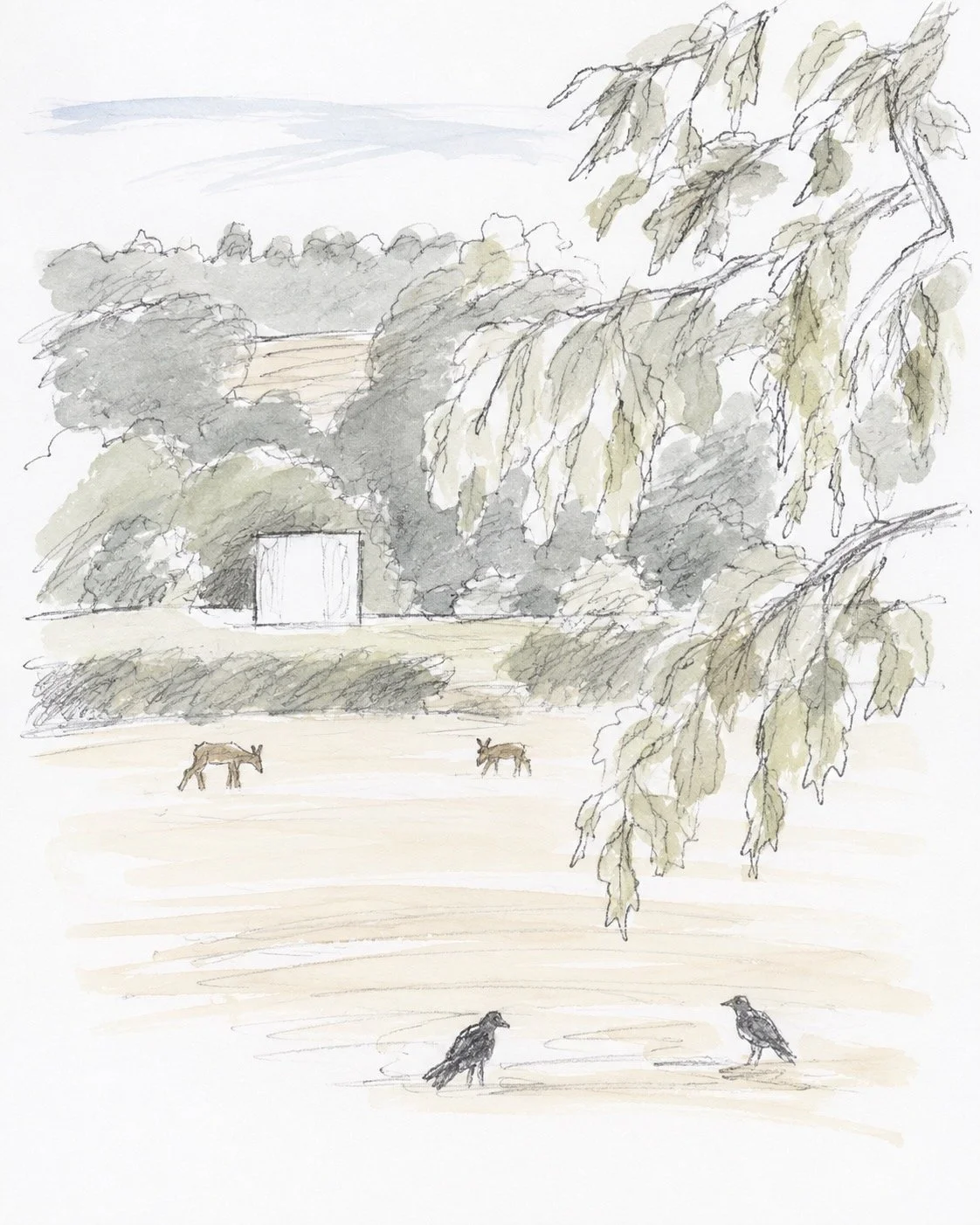
In Norse mythology, Odin’s ravens were Huginn and Muninn — “thought” and “memory.” Each day they flew across the world, then returned to Odin to tell him what they had seen and heard.
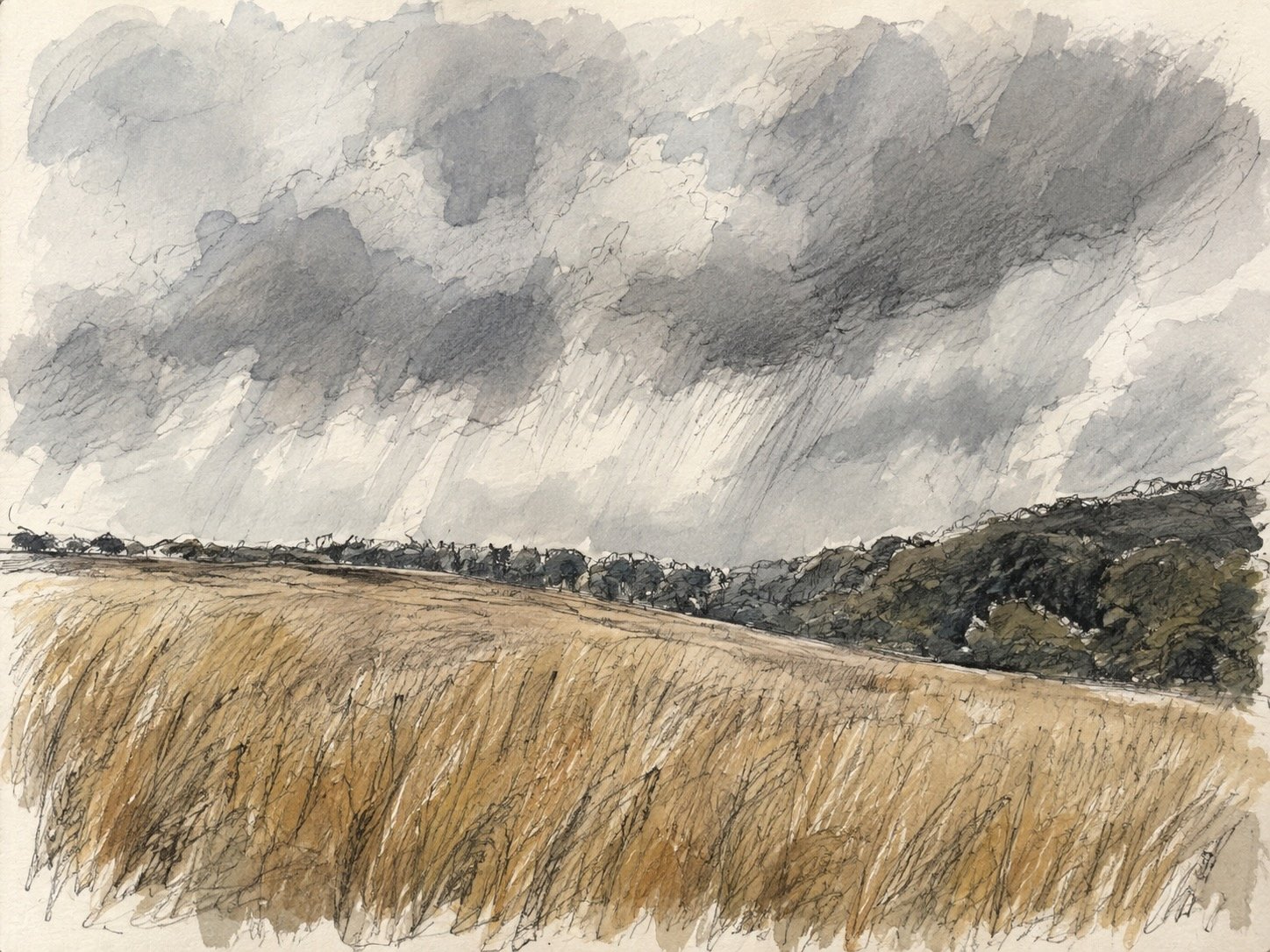
The rain felt genuinely welcome after so many dry walks. I’d almost forgotten the particular pleasure of walking through it — the changed light, the smell of wet ground, and the countryside suddenly alive again.
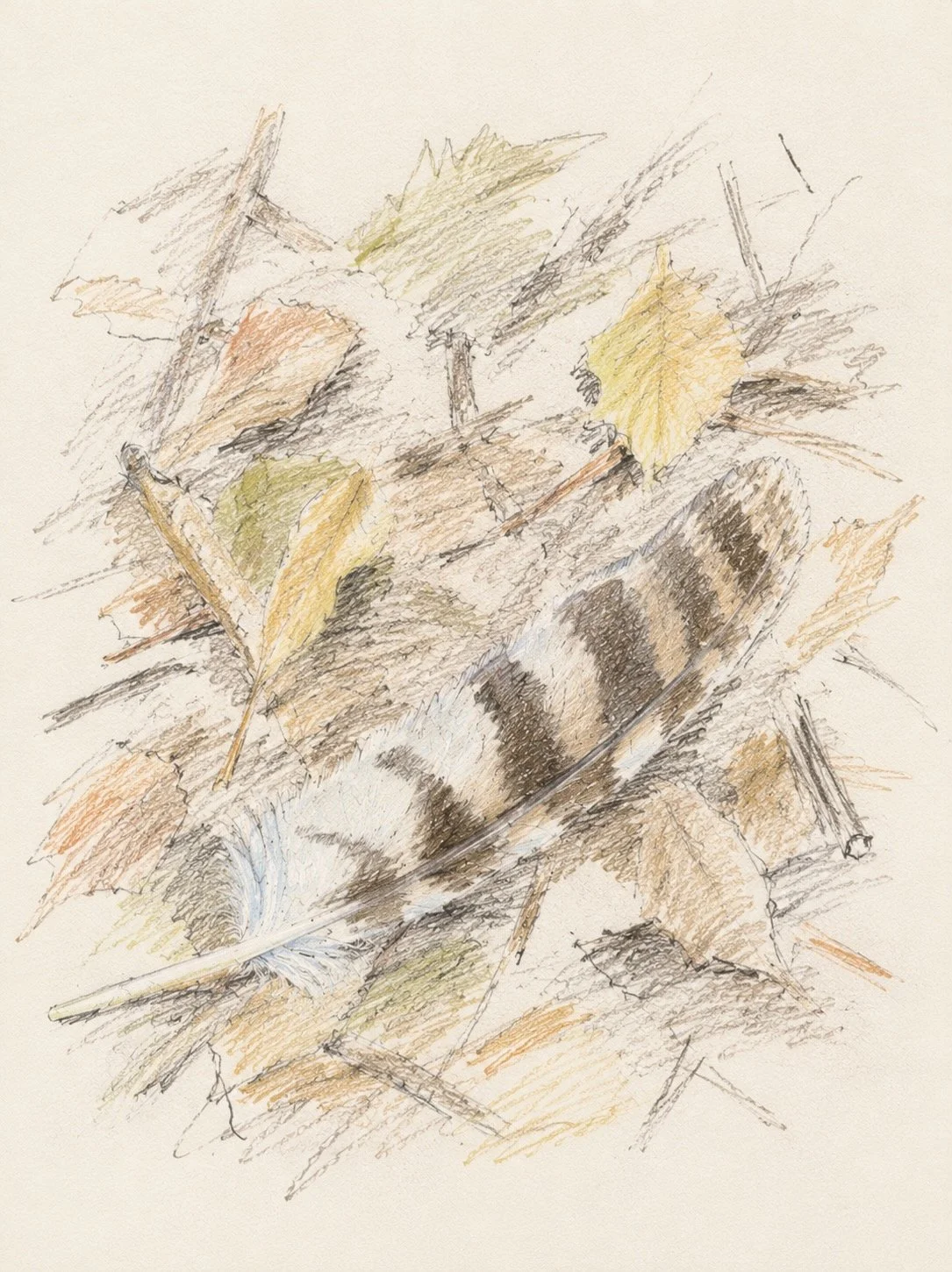
Tawny owl feather - soft, fringed edges help a tawny owl fly almost silently. Air passes over the feather with barely a sound. perfect for hunting after dark.
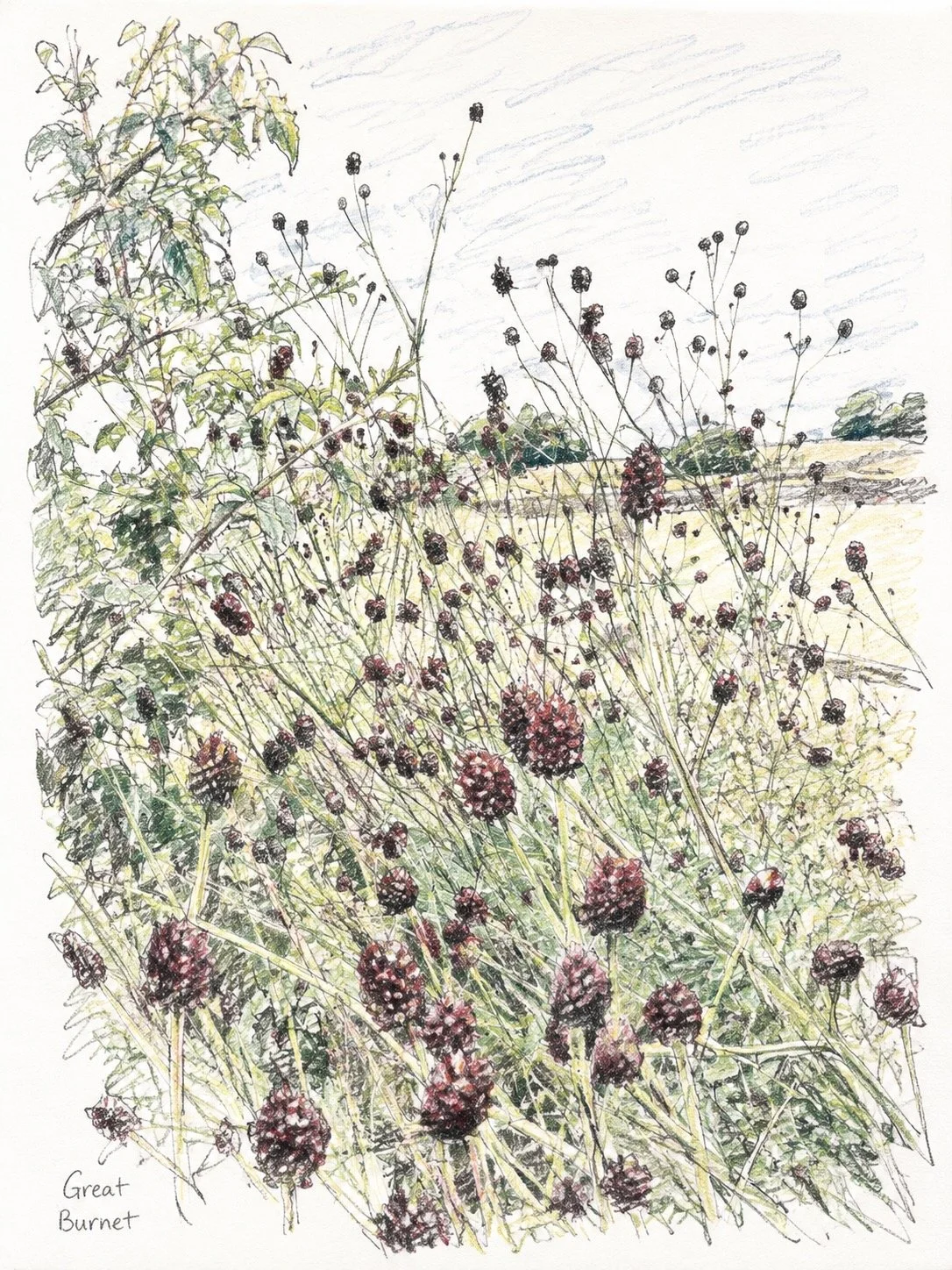
Great Burnet's latin name, Sanguistora, means blood absorber. Its dark red brown flowers resemble drops of blood. It was once used to stop bleeding.
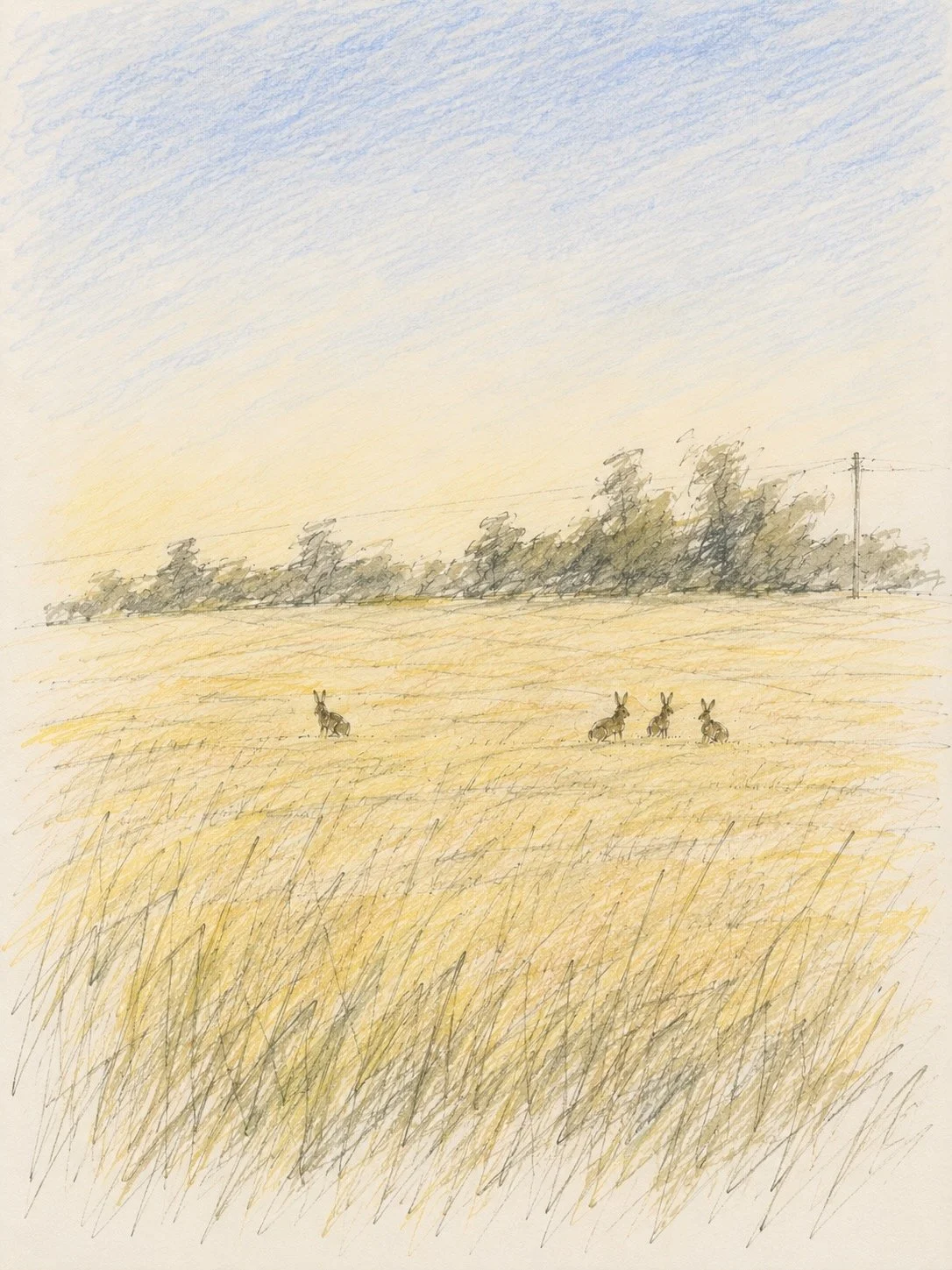
Four hares, almost hidden in the grass. Still shapes that appear once you start looking. Wildlife rewards a slower eye.
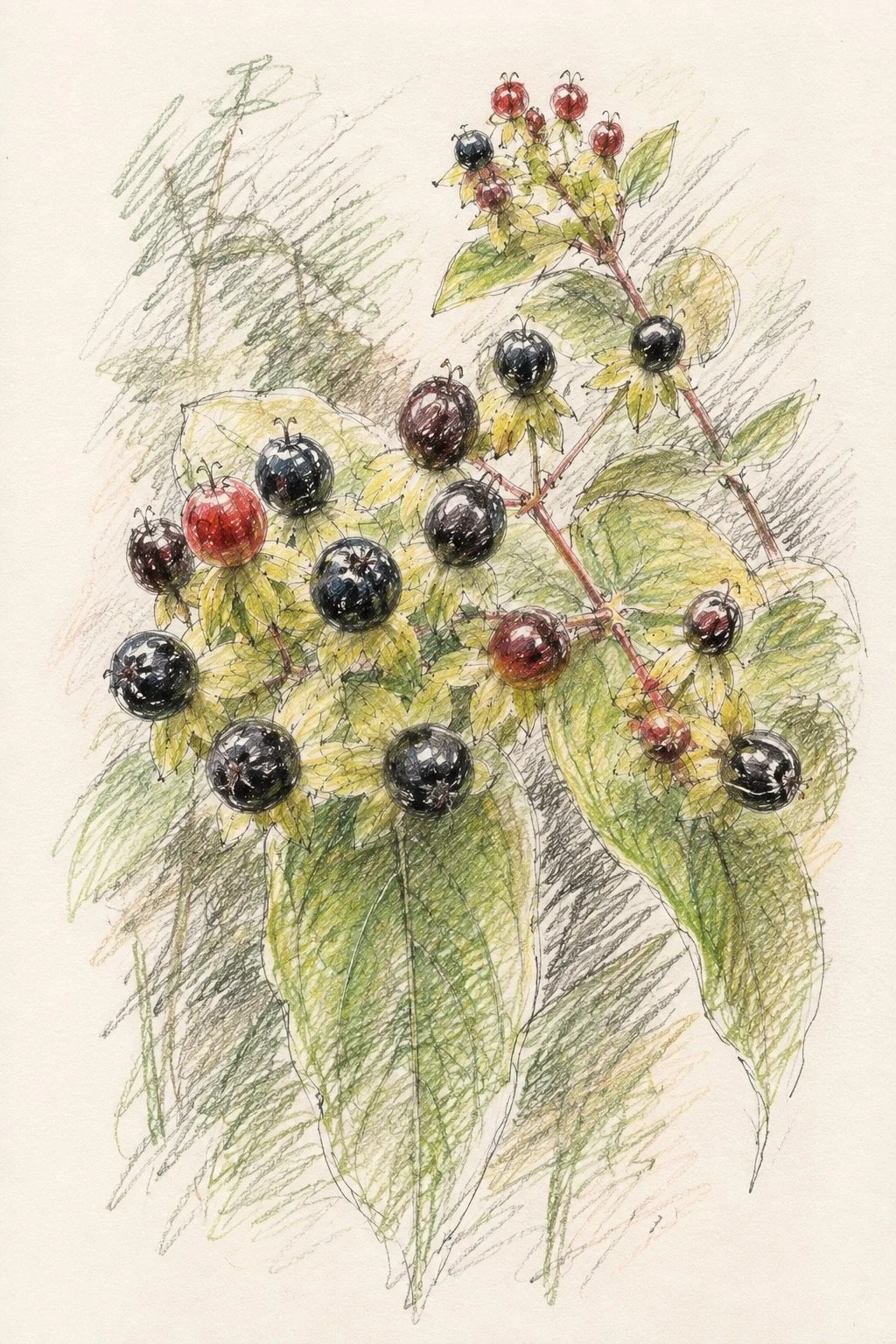
St John's wort has been used for healing since Greek times. Traditionally gathered around St John Day, it was believed to protect against evil and misfortune.
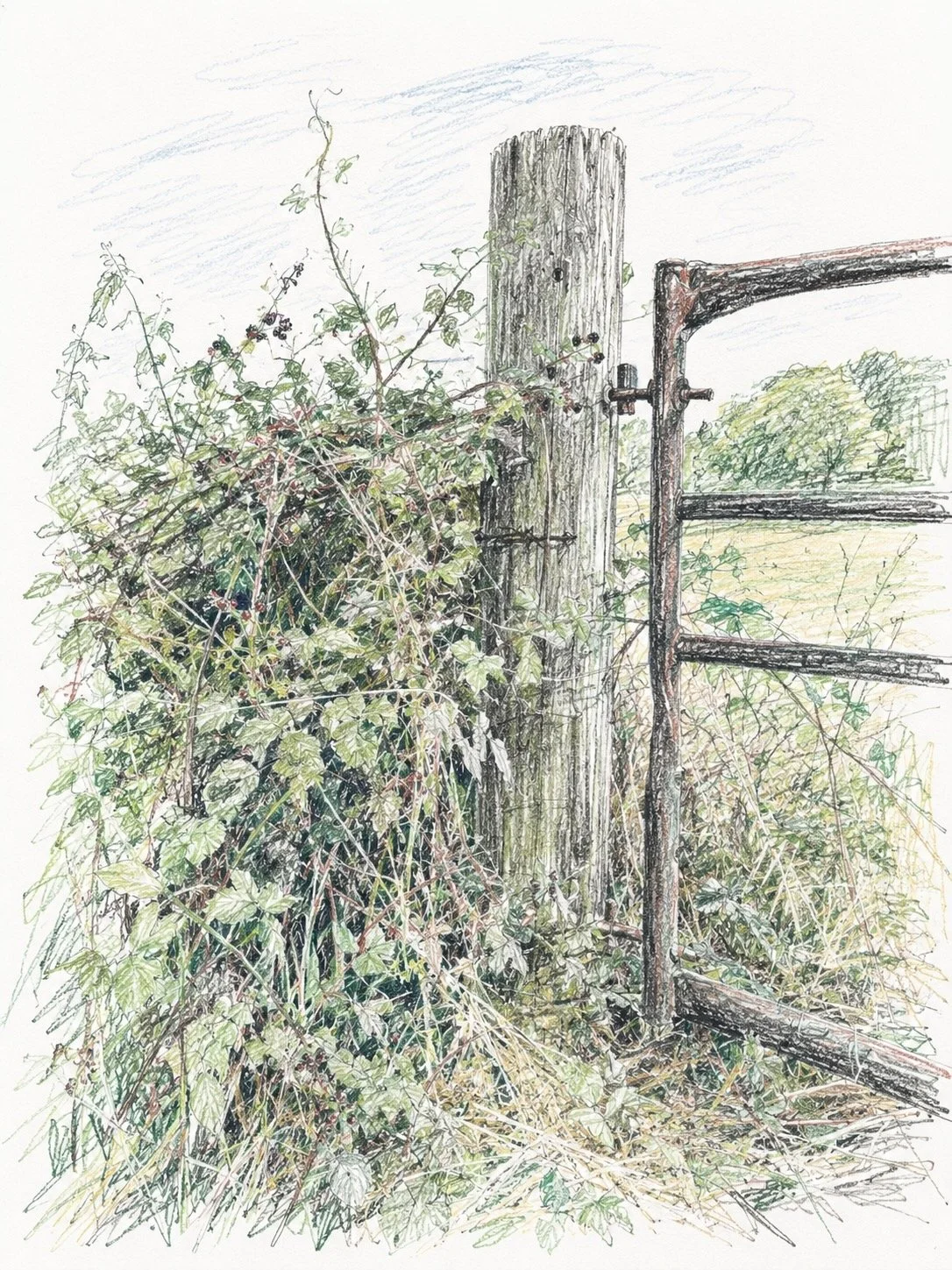
Gates have long symbolised choice, change and crossing over. An open gate means possibility, a closed one -mystery. Every gate asks - what lies beyond?
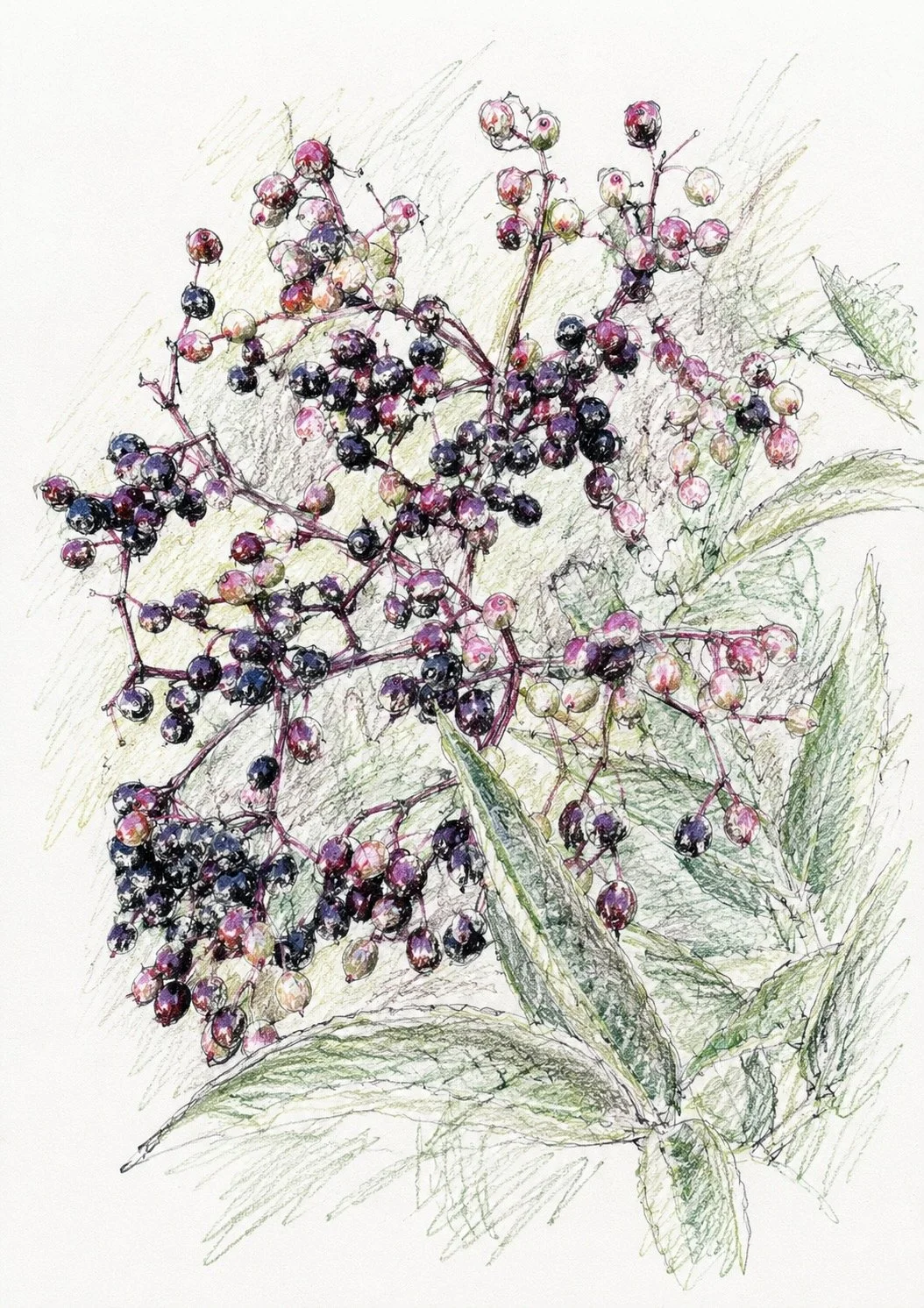
Elder was once believed to protect the home from witches and bad luck. Cook the berries with sugar and spices to make a rich elderberry syrup. Or add it to a gin and tonic - the most uplifting medicine.
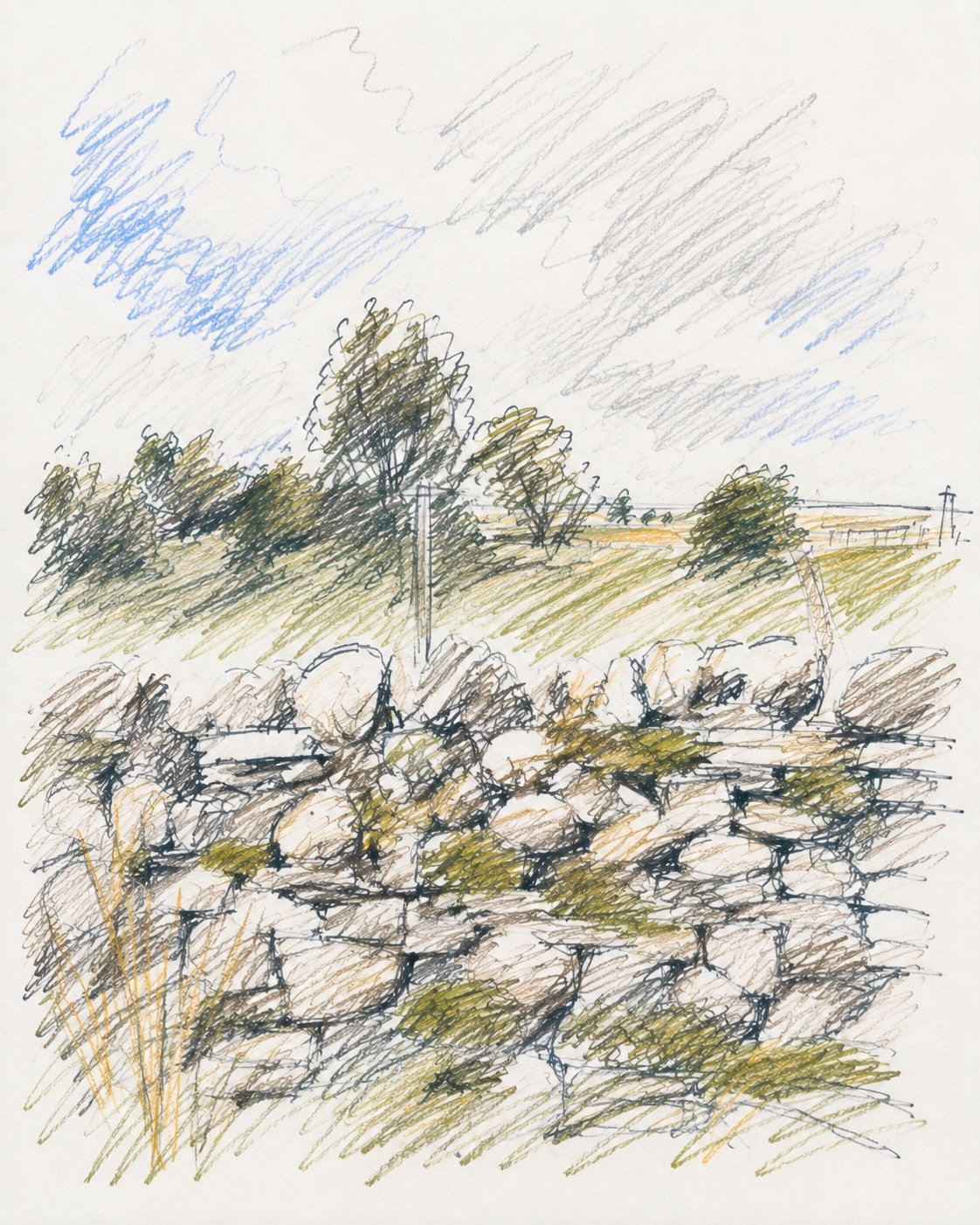
Dry stone walls are held together by gravity, not mortar. As the ground shifts, the stones can move rather than crack. a well built wall can quietly settle itself for centuries.
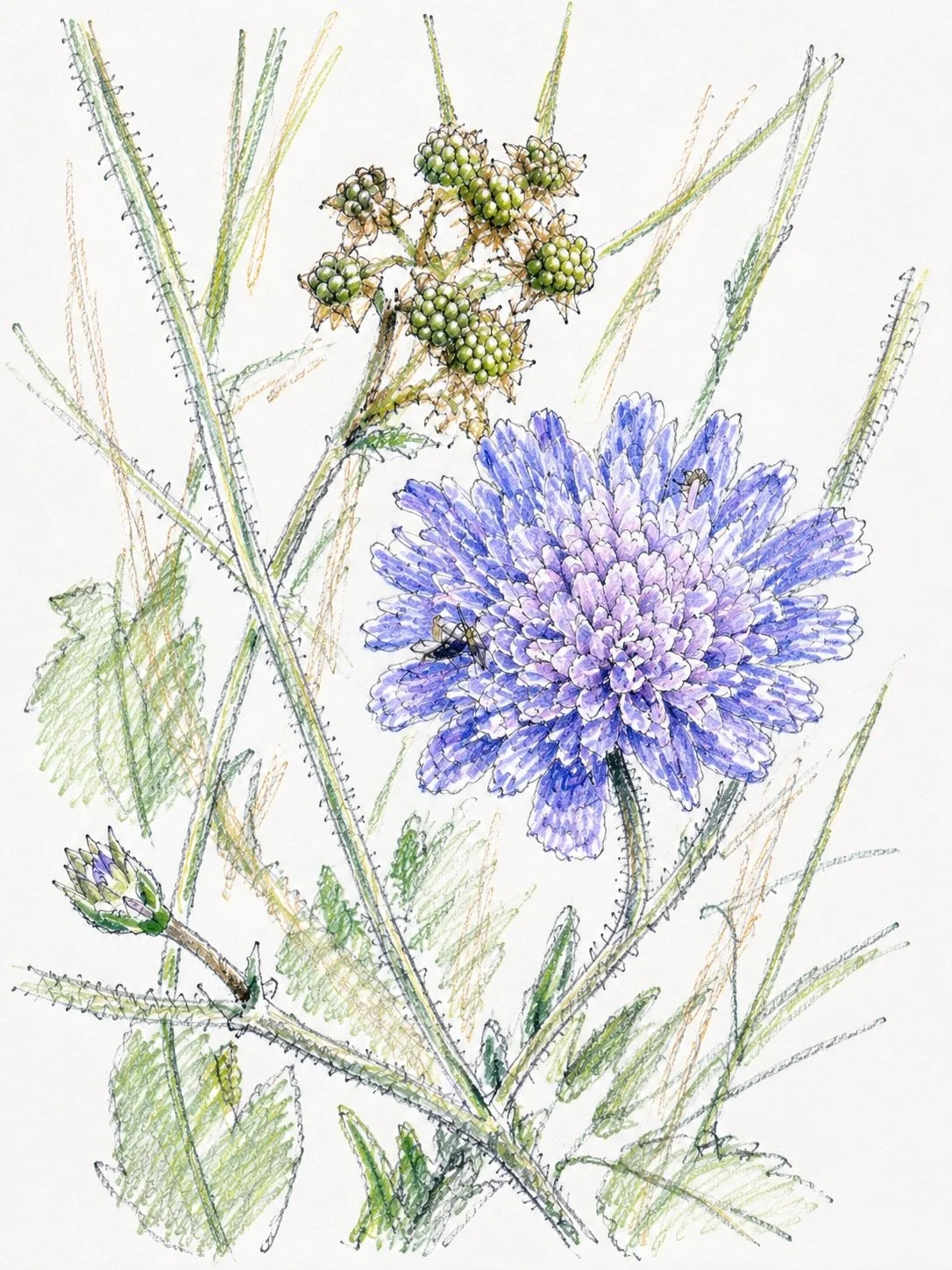
Field scabious was once used to treat scabies, which gave the flower its name. Each flowerhead is actually a crowd of many tiny flowers. Bees and butterflies adore it- a miniature meadow banquet.
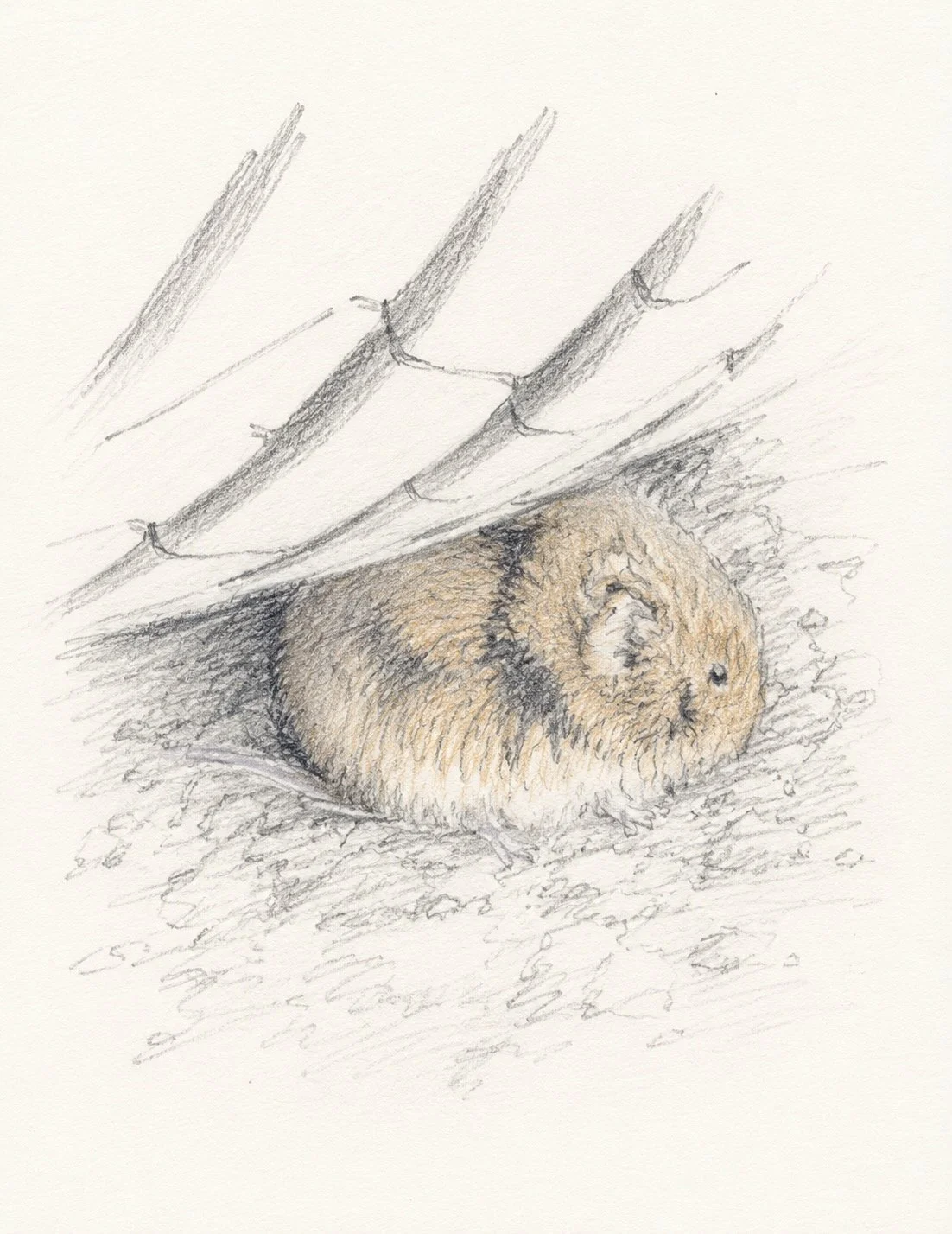
Most of the meadows's wildlife remains hidden. Only occasionally does a field vole pause long enough to be noticed.
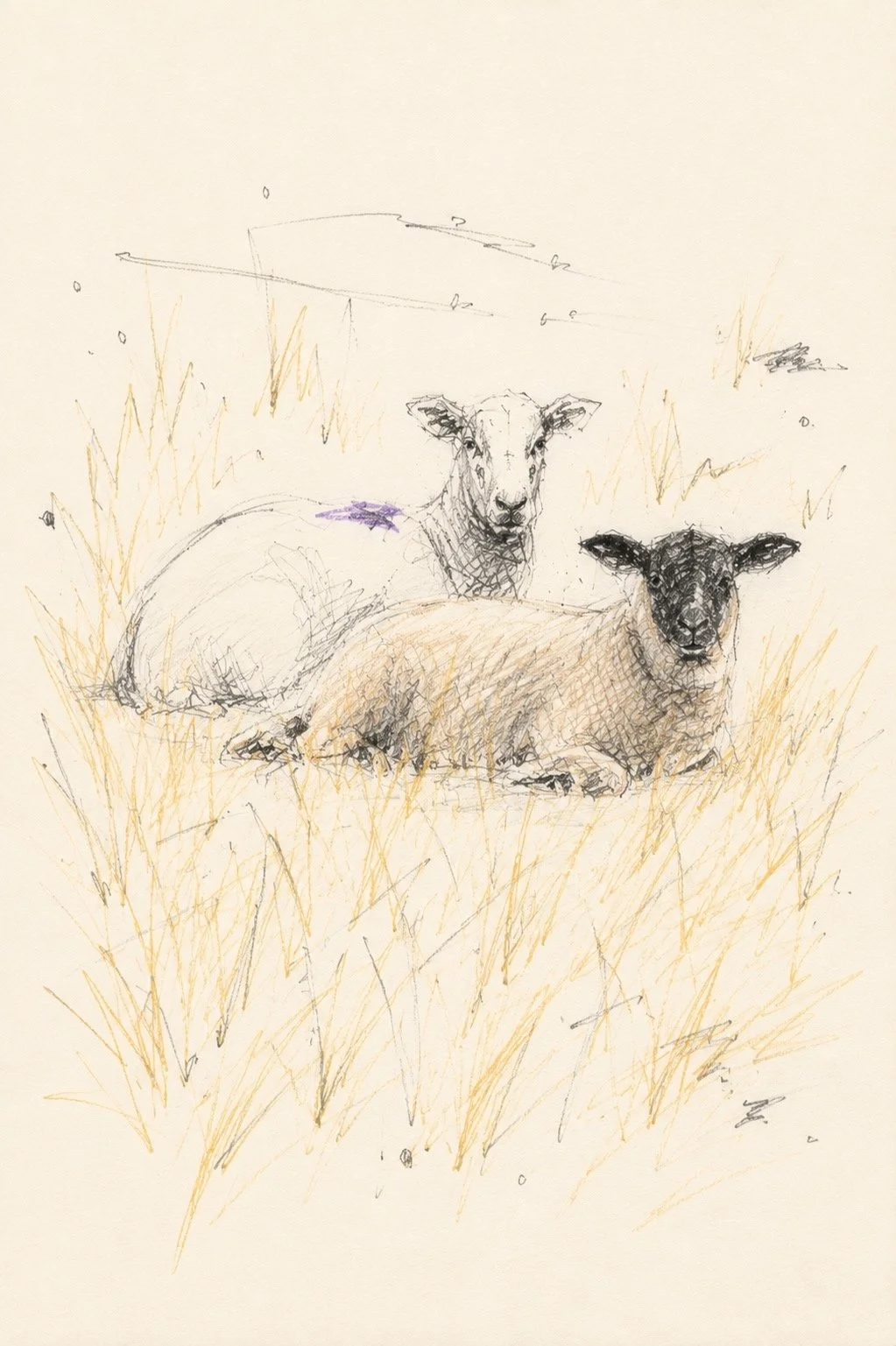
The long dry spell has turned the meadow the colour of straw, leaving only scattered patches of green where moisture still lingers.
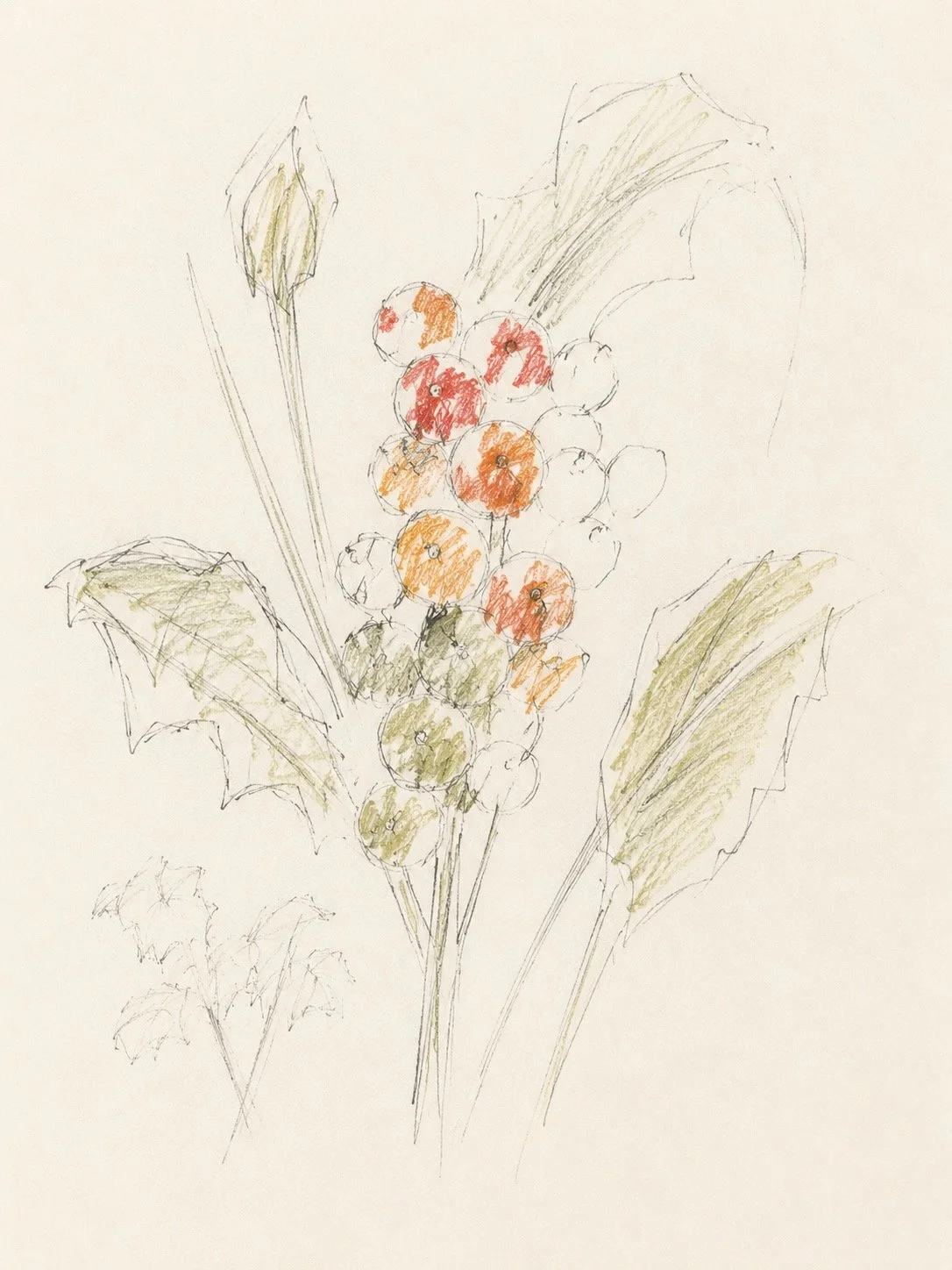
Lords and Ladies - despite its beauty and striking, colourful berries, every part of Lords and Ladies is poisonous. It is one of Britain's most striking woodland plants.
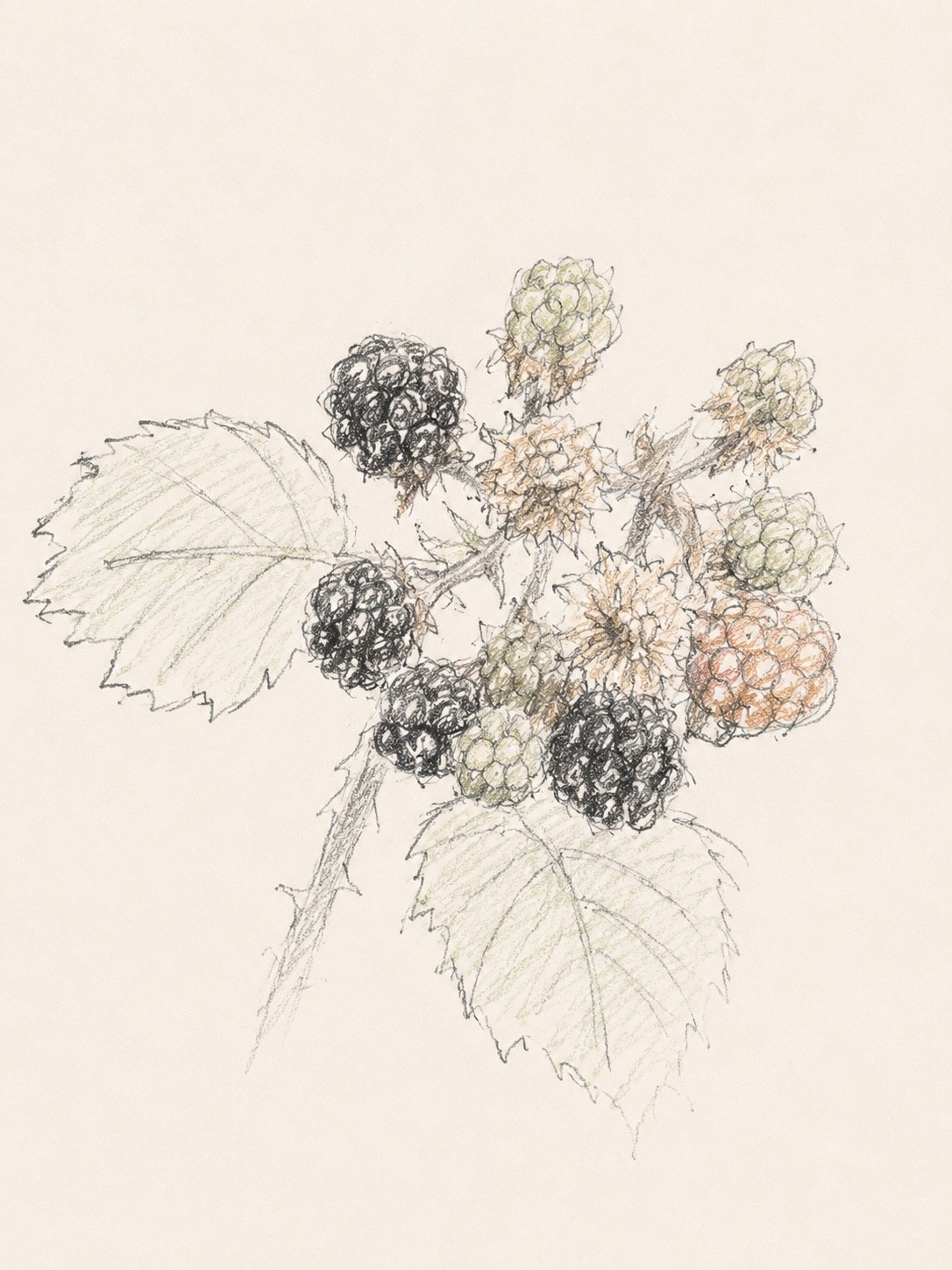
Blackberry - every blackberry picked on a walk seems destined for a crumble. Somehow, the first ones always taste the best.
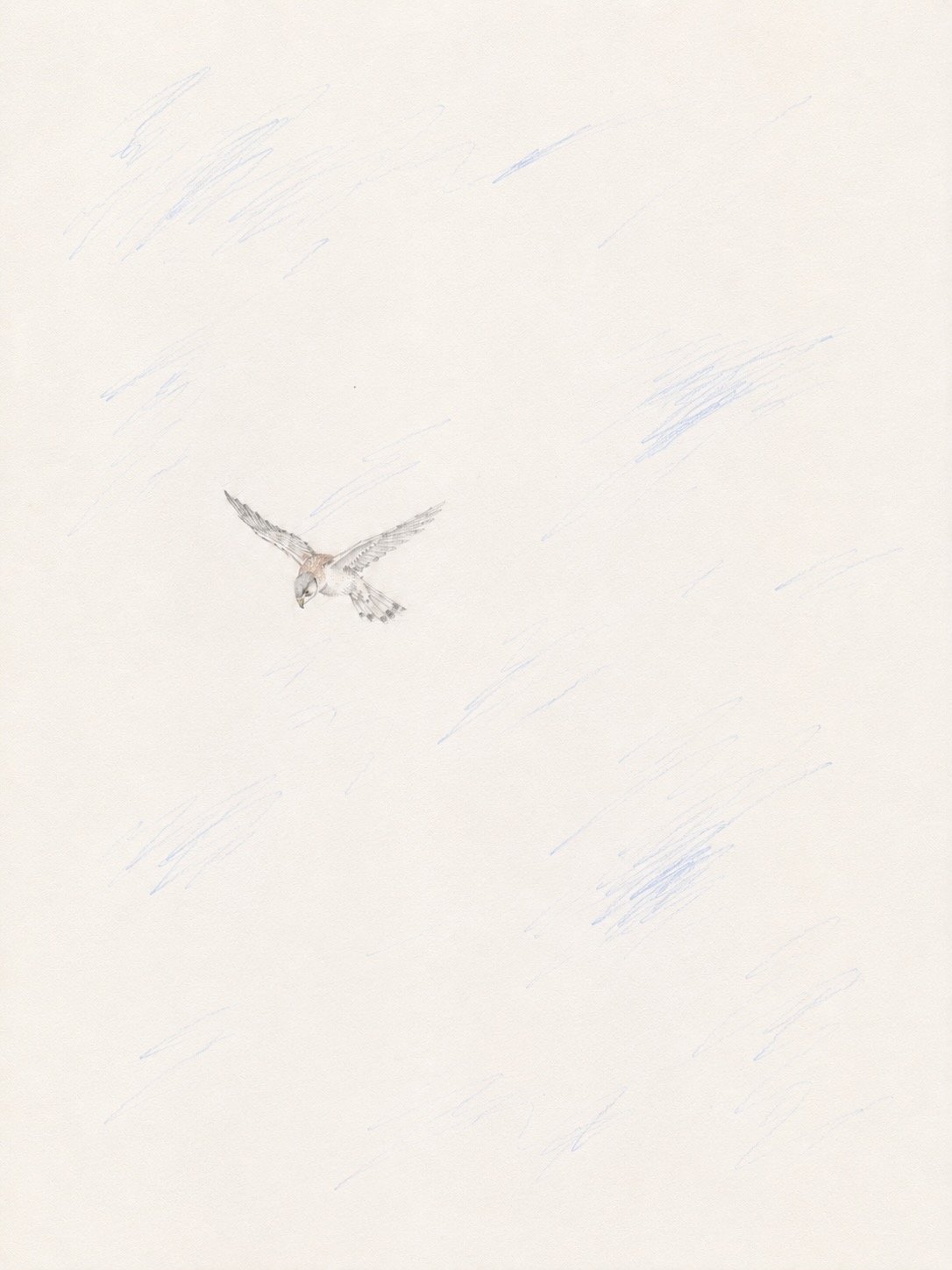
Kestrel - one of those moments when movement catches your eye before you realise a kestrel is hanging on the wind.
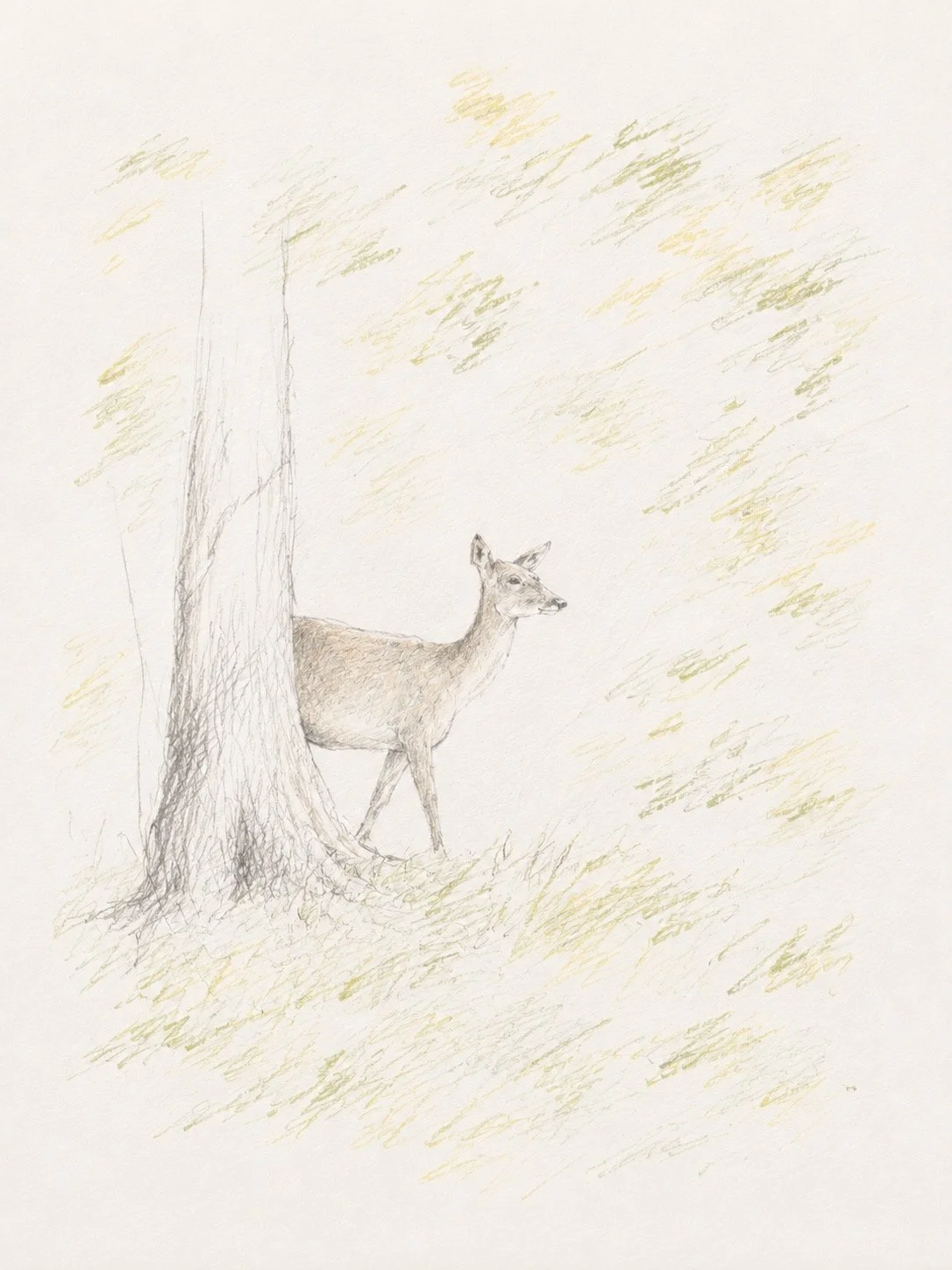
Roe Deer - seeing a roe deer is becoming less unusual then it once was. New woodland, hedgerows and changes in farming have helped their numbers increase.
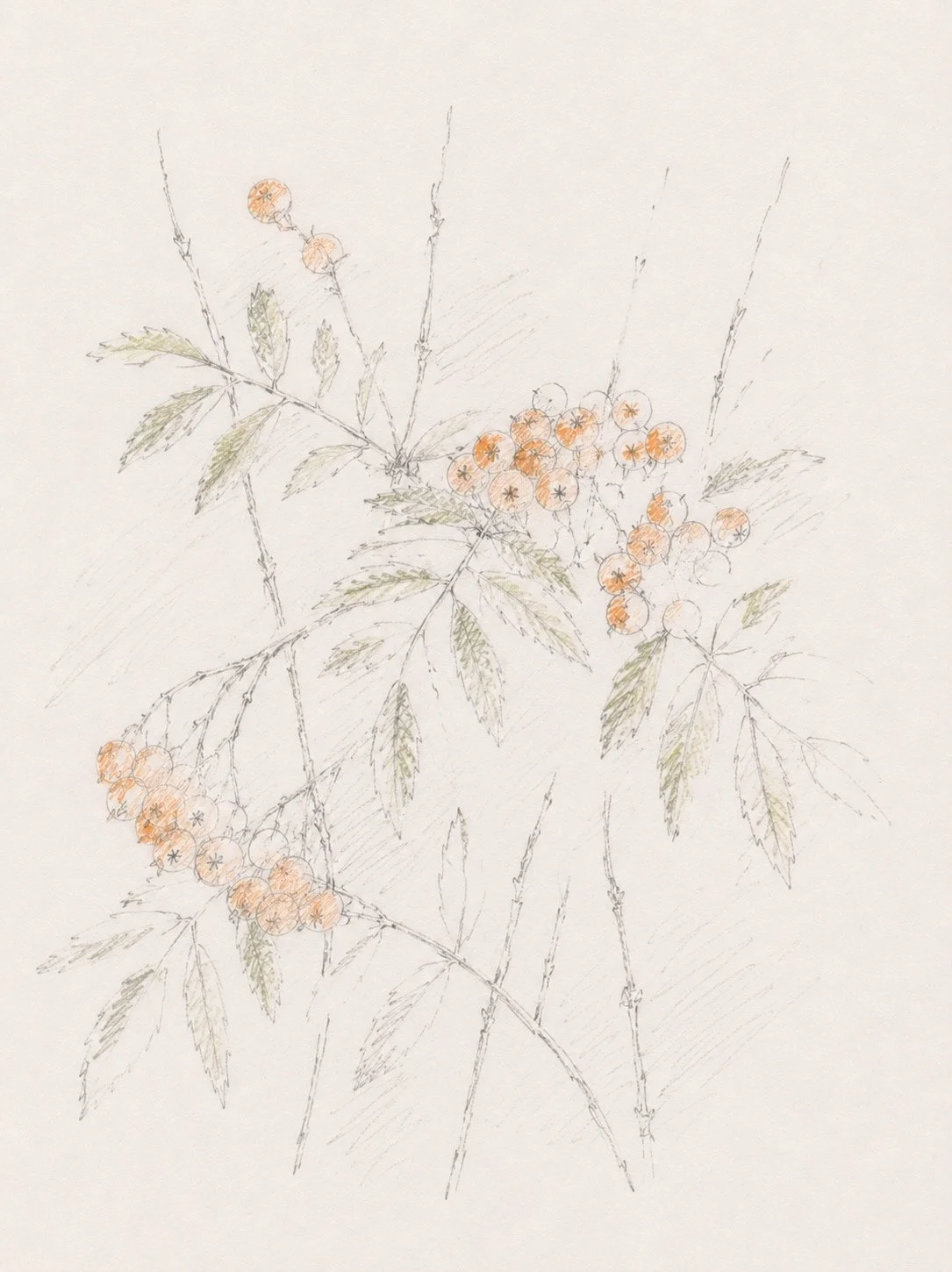
Rowan - rowan trees were planted besides homes and farms because they were believed to protect against misfortune and evil spirits.
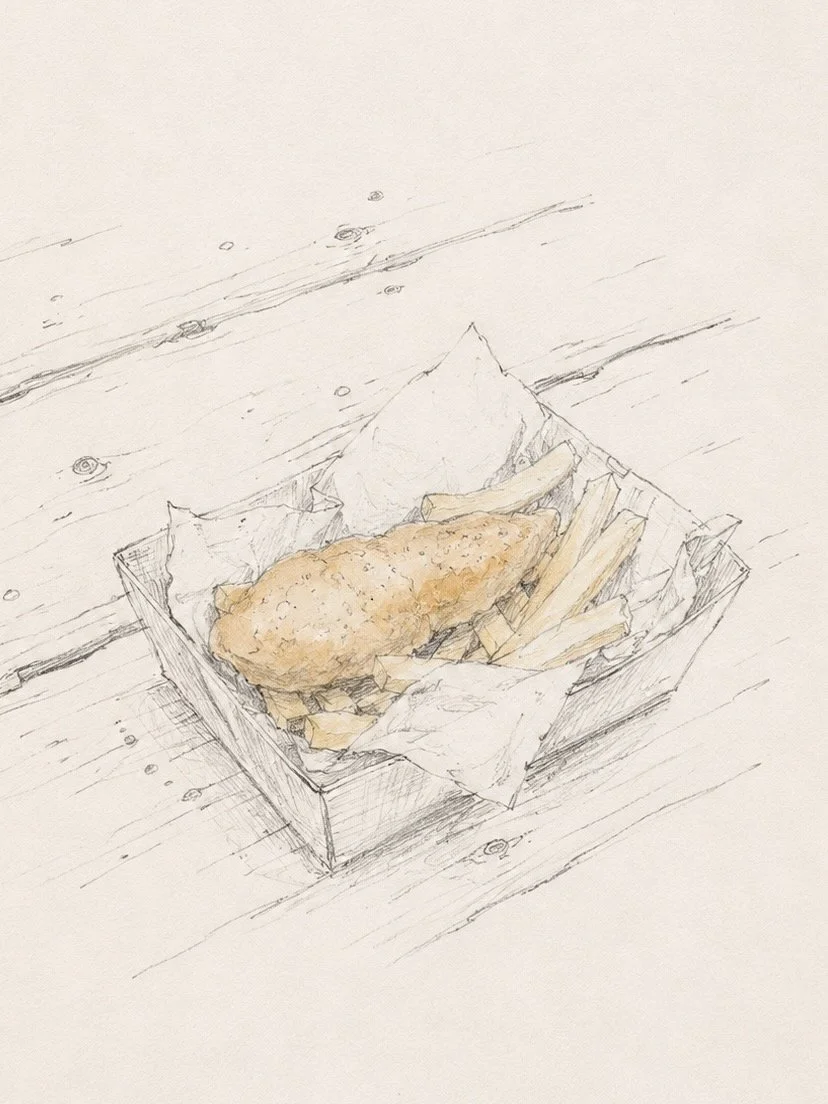
Fish and Chips - the best walks usually end with fish and chips.
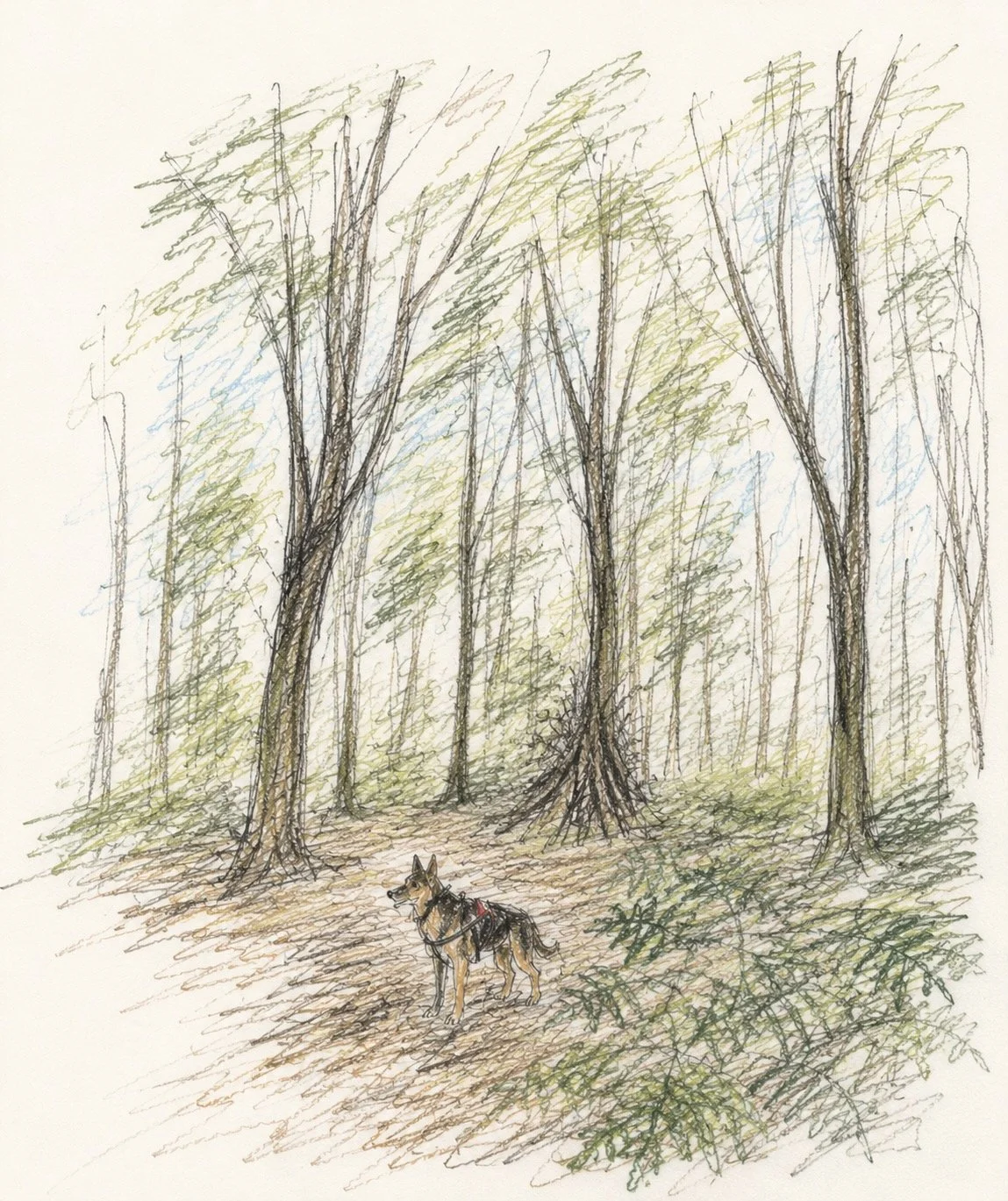
Where Do They All Go? After hundreds of walks, Vera is still trying to solve the mystery of the disappearing squirrels.
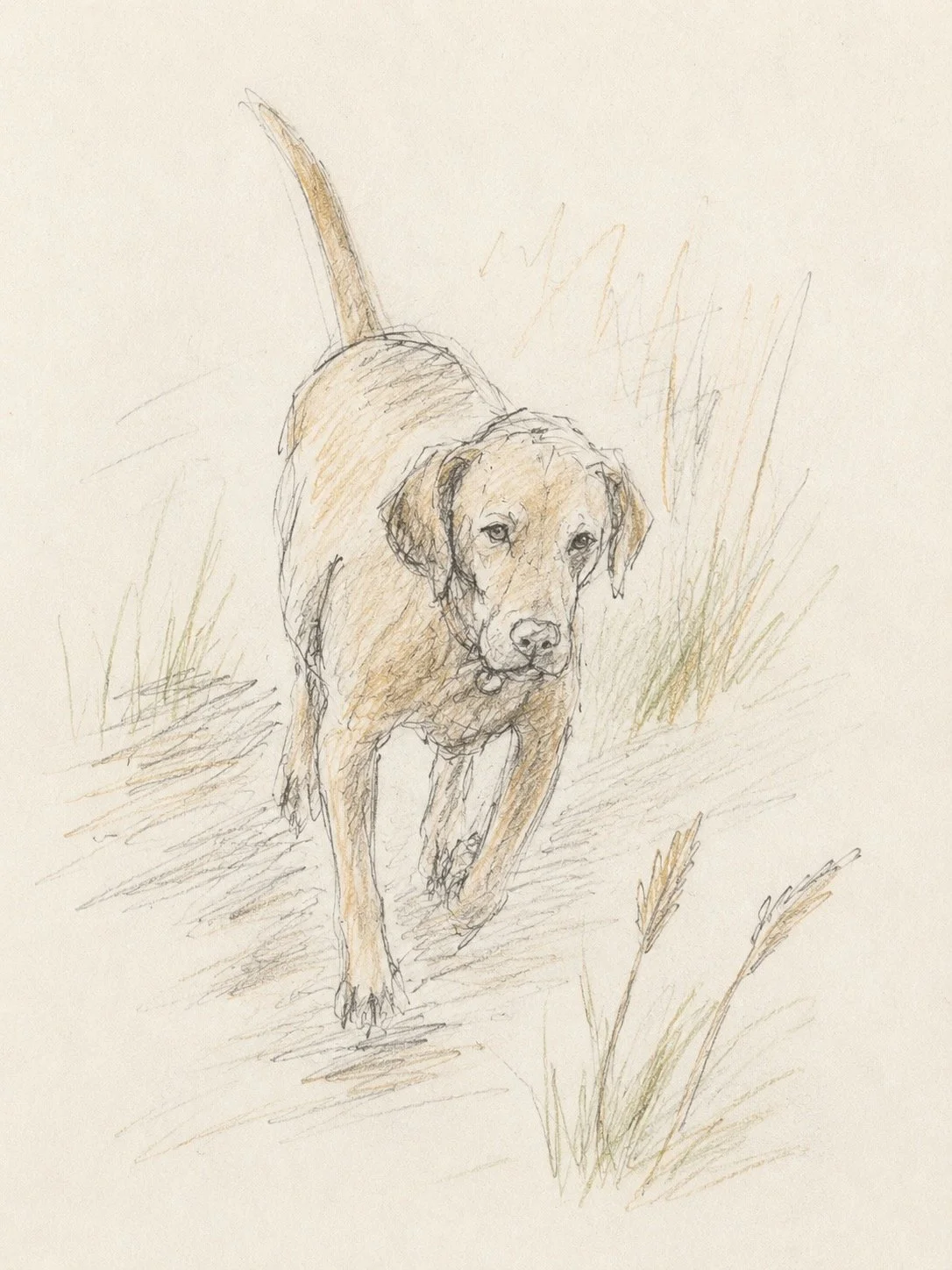
Otto the Vizsla - Otto never seems to tire. Like many Vizslas, he was bred to cover miles of open countryside before quietly returning to his people.
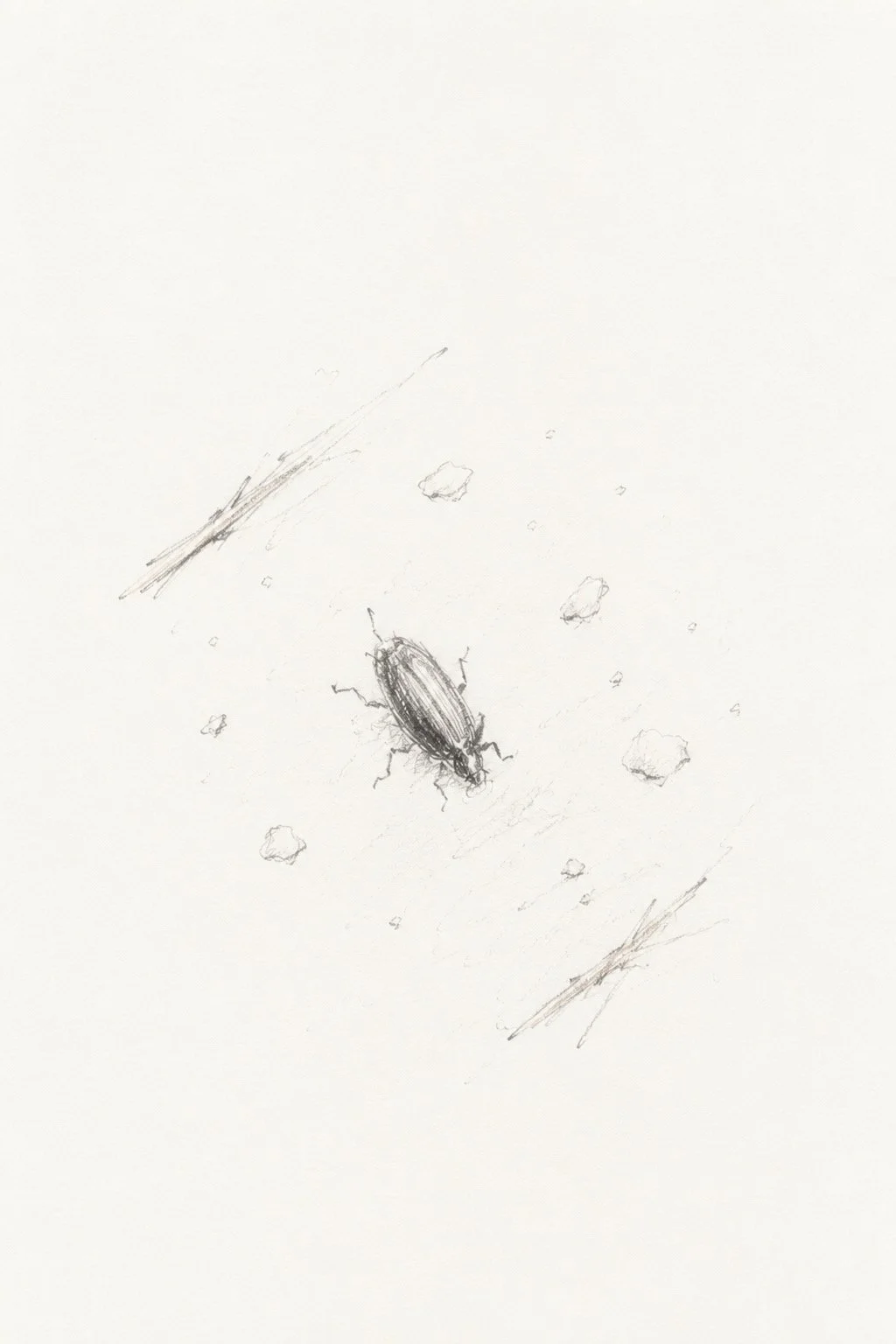
Ground Beetle - active hunters, feeding on slugs and other garden pests. They are an important ally for gardeners.
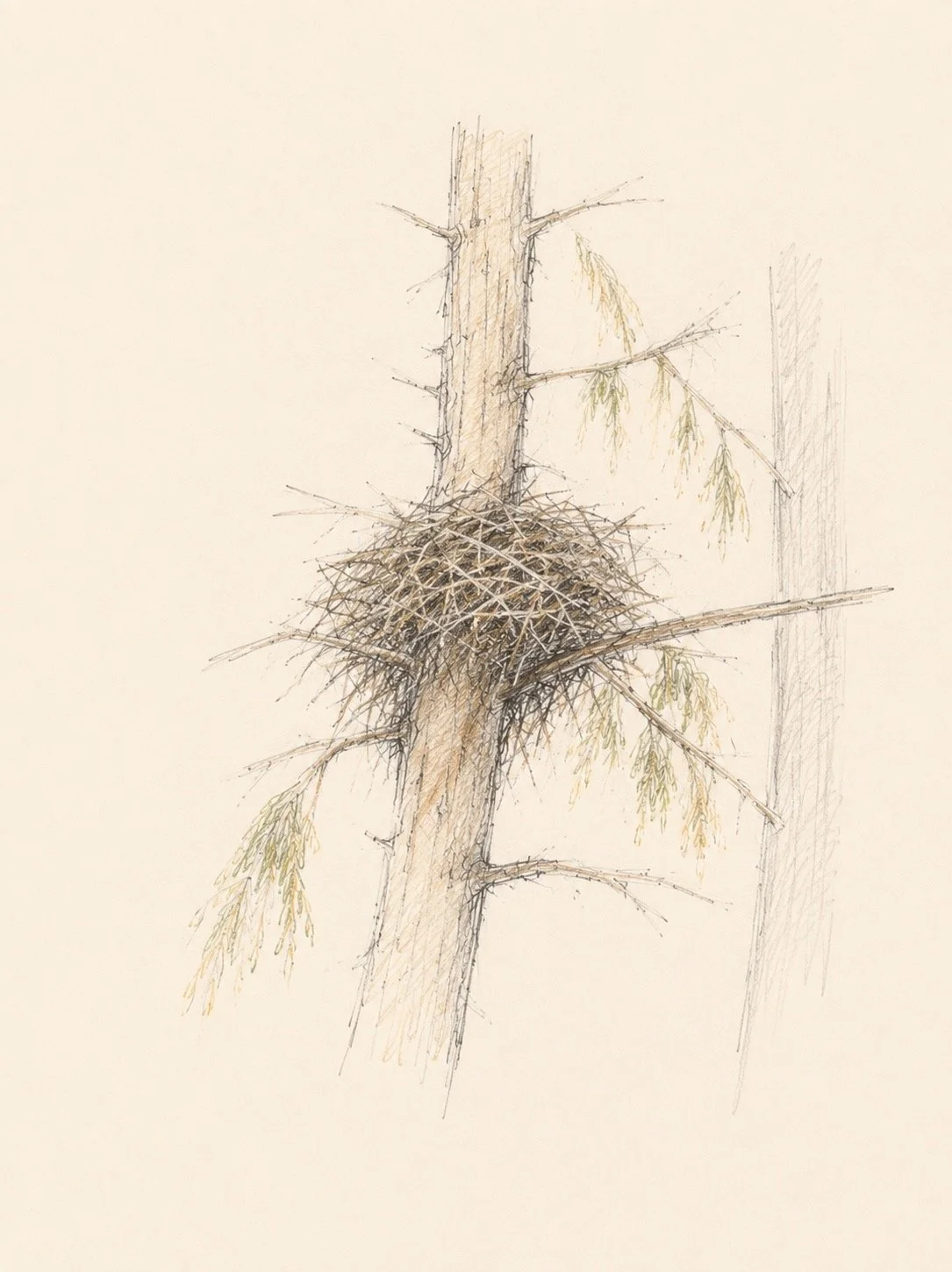
Red Kite Nest - an old red kite nest can become surprisingly large, with each breeding season adding another layer of sticks.
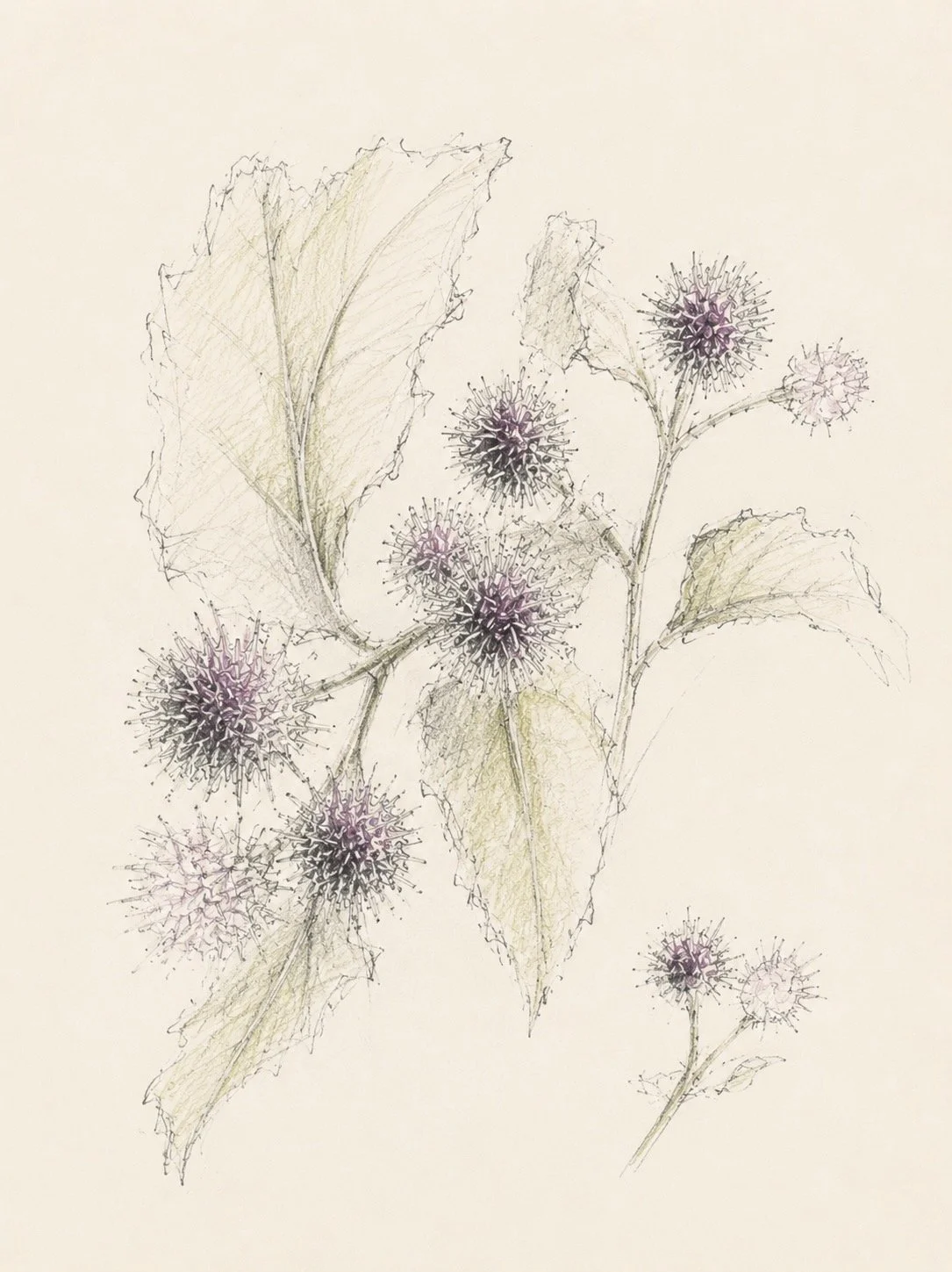
Burdock Burrs - better known to almost all dog walkers as sticky buds, burdock burrs are covered in tiny hooks that cling to fur, clothing and just about anything else they touch.
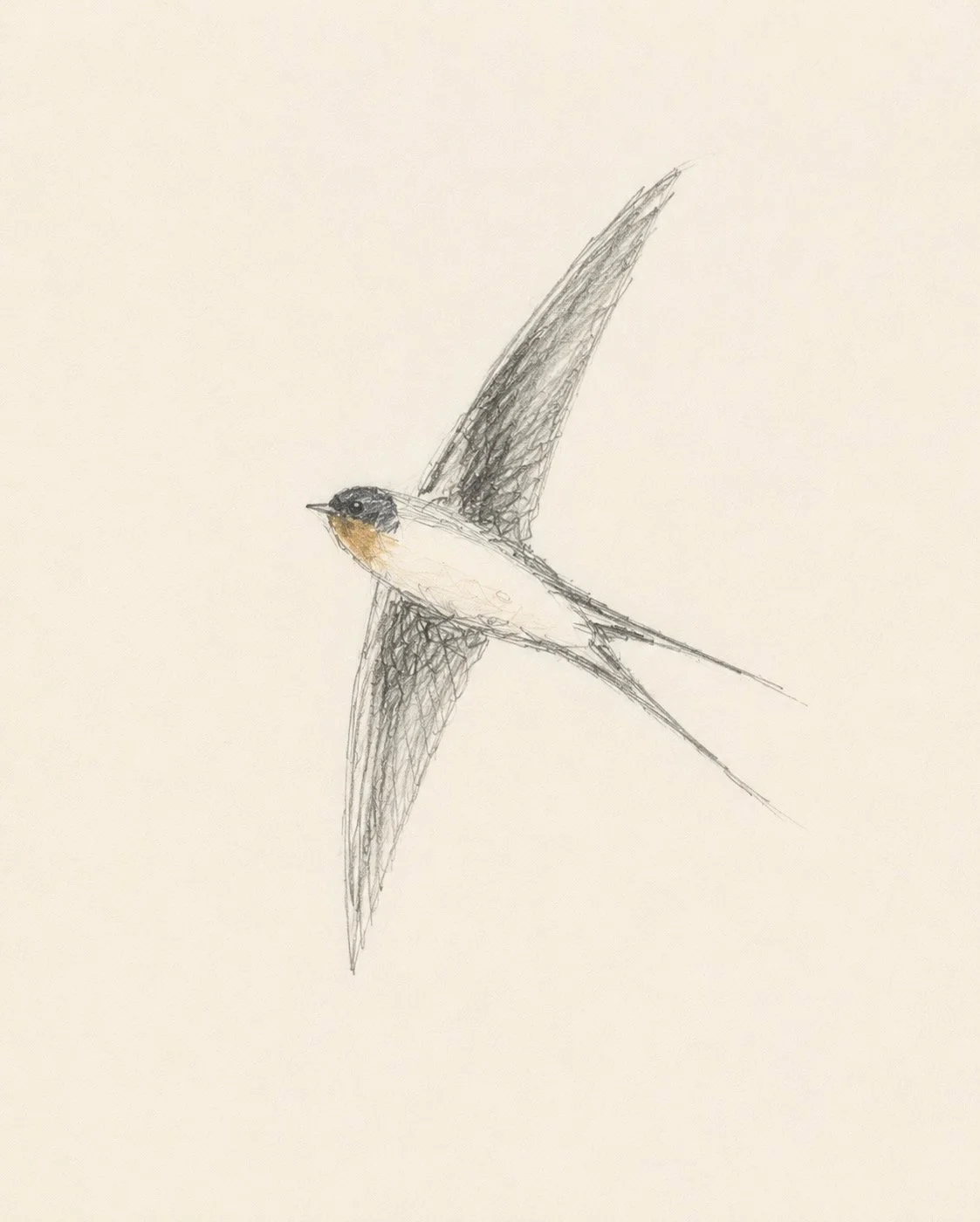
Swallows - these birds spend just a few months with us before flying thousands of miles to Southern Africa for the winter.
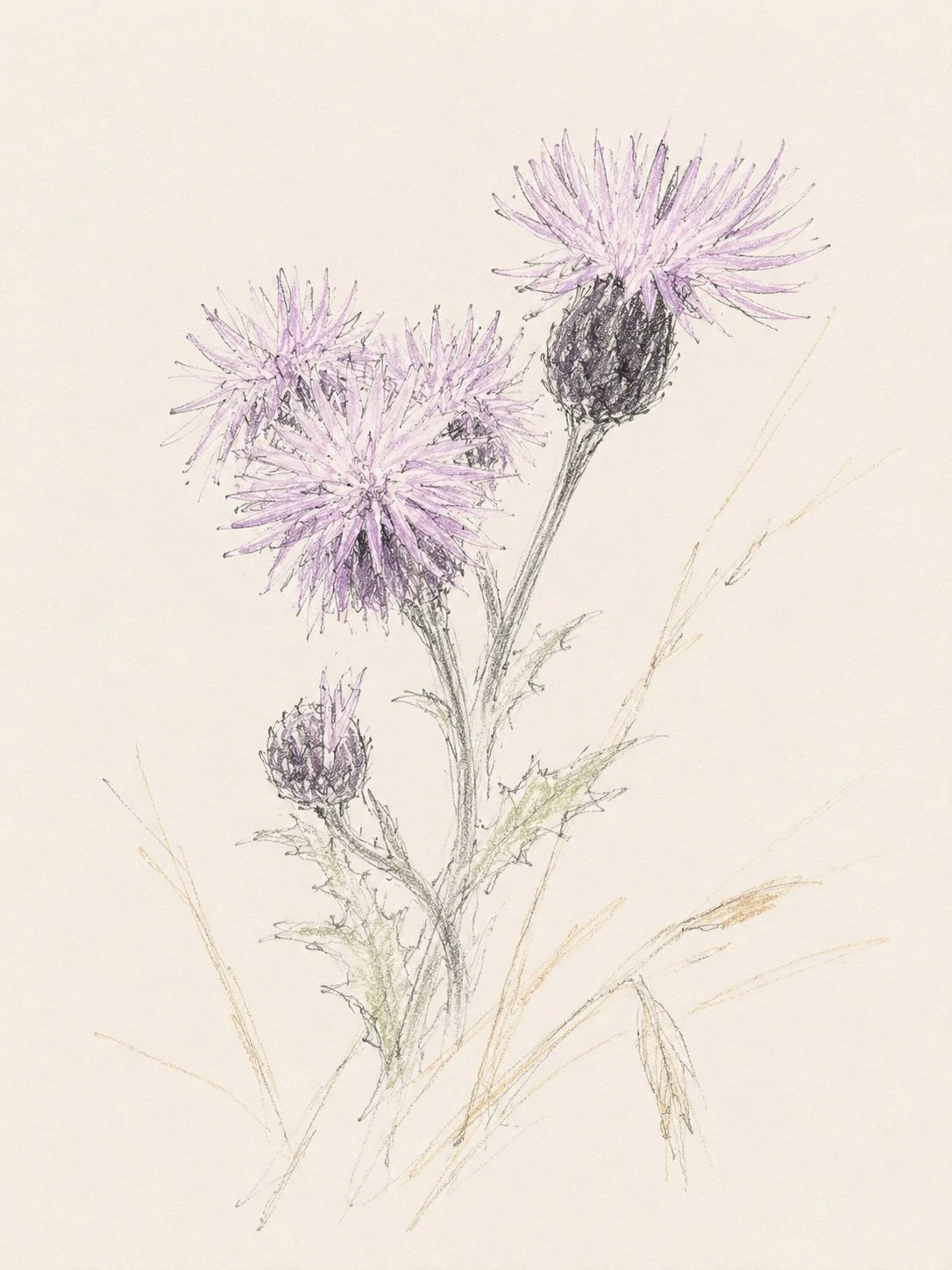
Thistle - one of the best late summer plants for bees and butterflies. Their nectar provides an important food source when many other wildflowers have finished flowering.
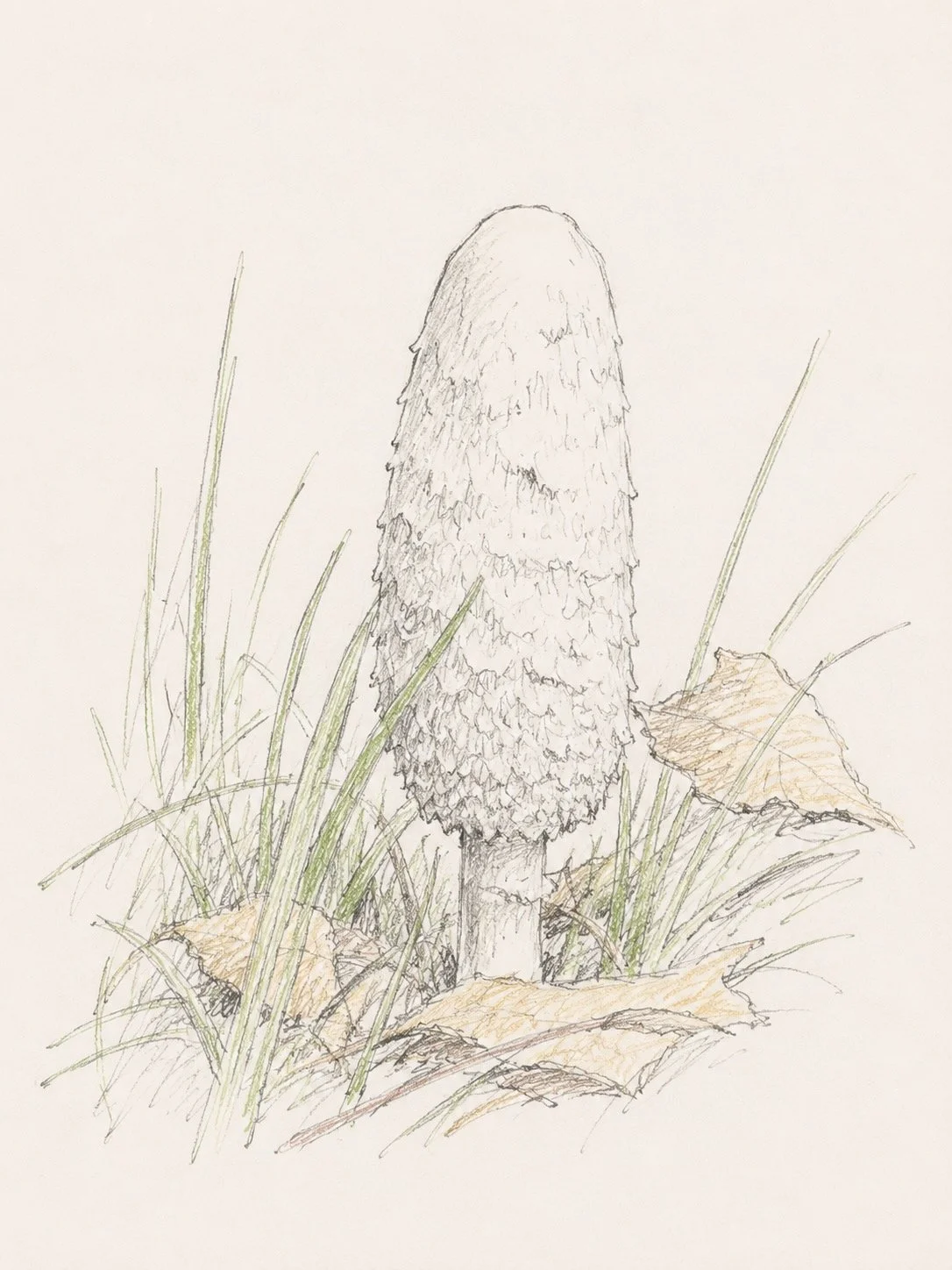
Shaggy Inkcap Mushroom - one of Britain's best edible mushrooms, but only when young. As they mature, the cap dissolves into a black liquid to release its spores.
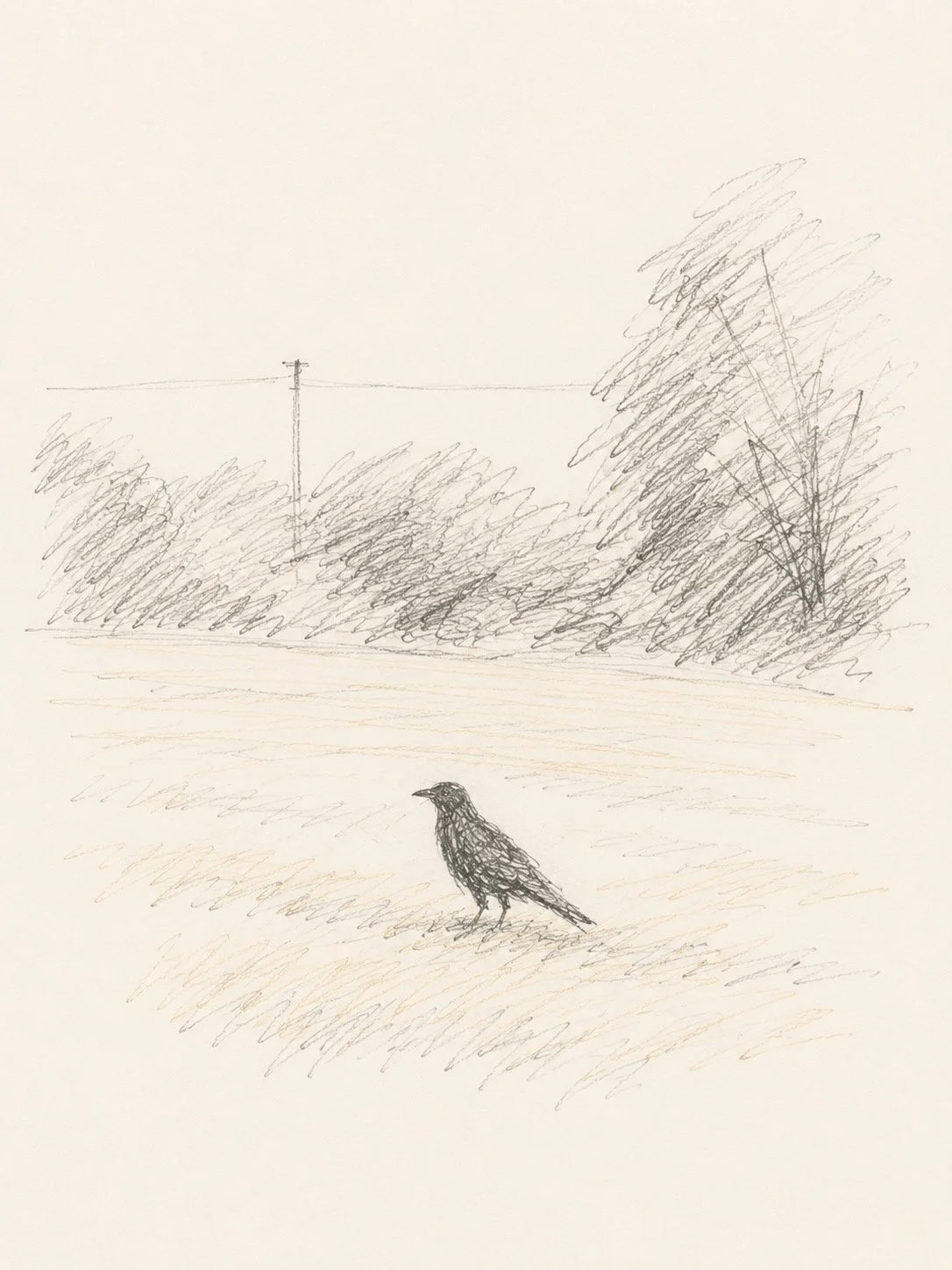
The Rook - they are rarely alone for long. After harvest they're often seen walking the stubble, searching for grain, insects and worms.
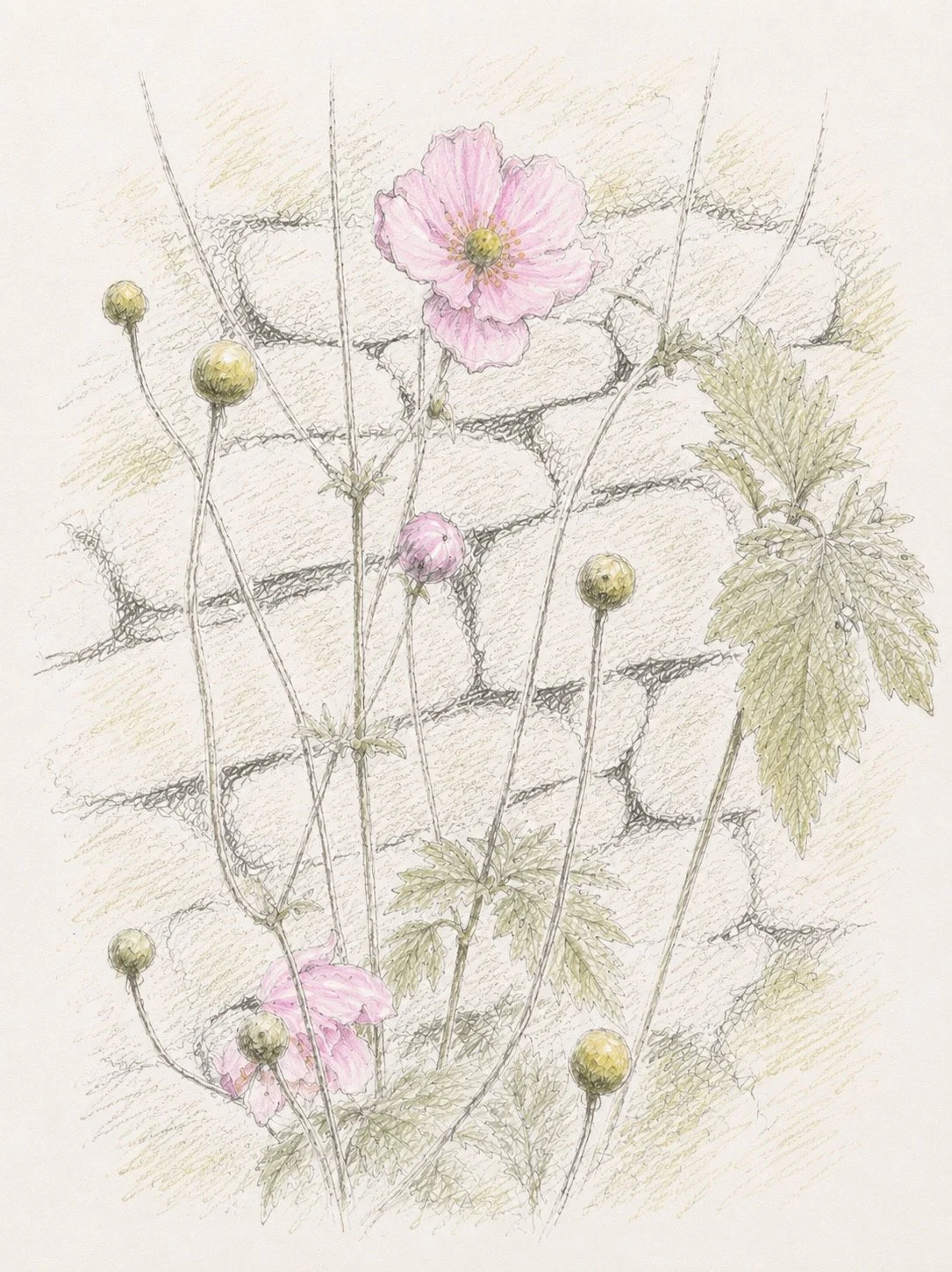
Japanese Anemone - despite the name, the plant reached Britain from China. They flower late in the year, bringing colour to gardens long after many other plants have faded.